We test this off-road biased adventure bike from BMW Motorrad
In 1980, BMW Motorrad introduced the R 80 GS and it effectively invented the Adventure Bike segment. Fast-forward to the 2020s, we were introduced with the R 1250 GS and the R 1300 GS. While these adventure bikes from BMW are off-road capable, their overall design lean towards a more expressway-type of riding, comfort and touring.
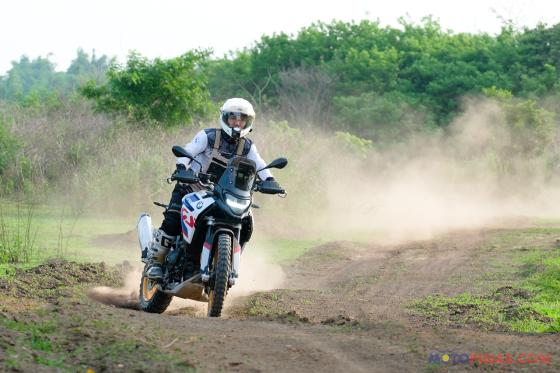
CDS Trails at Arden Botanical Gardens
However, in recent years, manufacturers began introducing middleweight adventure bikes that are more off-road capable than ever and have blurred the lines between an adventure bike and an enduro bike.
The Germans responded by stripping the F 850 GS to bare essentials while at the same time increasing its displacement to 895 cc to improve torque and power outputs. BMW also made it more like an enduro bike than an actual adventure bike. This is the new F 900 GS.
105 horses
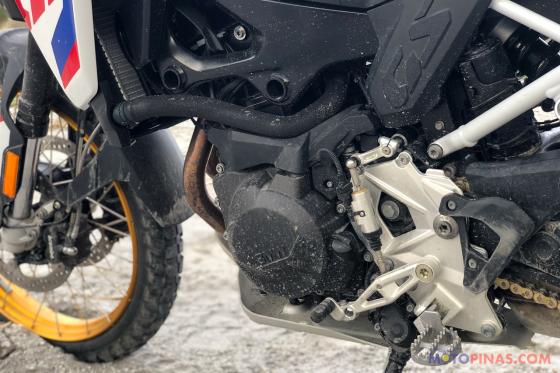
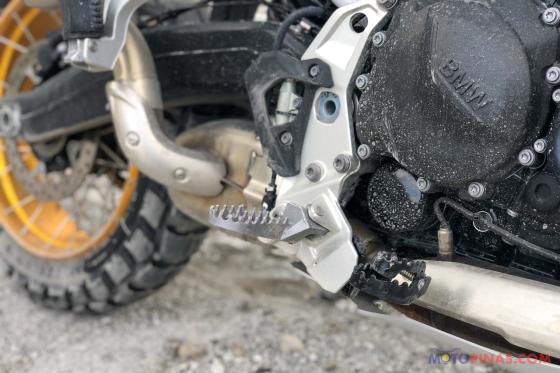
Easily adjustable shift pedal, but we wish it was also foldable
At the heart of the new F 900 GS is an 895 cc, liquid-cooled DOHC parallel twin-cylinder engine with a 270-degree crank. BMW increased the outgoing F 850 GS engine’s bore by 2 mm to add an additional 42 cc in displacement. This additional displacement has increased the new F 900 GS’s power to 105 PS (105 HP) and 93 Nm of torque. By contrast, the outgoing F 850 GS produced 90 PS and 86 Nm of torque.
Additionally, according to BMW, the new F 900 GS engine now enjoys a new cylinder head and forged pistons – which are now lighter and more durable than those used in the F 850 GS. The demo unit we enjoyed is equipped with BMW’s Gear Shift Assist Pro (quick shifter) so shifting up and down through all of its 6 gears needs no clutching, except of course when coming from a complete stop.
Less is more
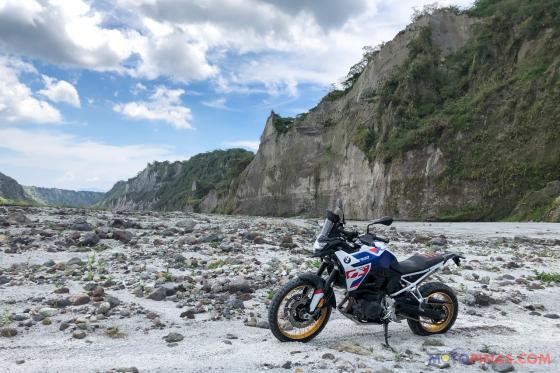
One of the highlights of the new F 900 GS is that it weighs 14 kilograms LESS than the F 850 GS it replaces – only 219 kilos with all the liquids on and ready to ride. BMW achieved this by stripping the F 850 GS and leaving only the essentials. The F 900 GS’s plastic tank is also 62% lighter than the one on the F 850 GS and its carbon fiber-tipped AkrapoviÄ exhaust provides additional weight savings.
Its stripped-down tail section - which exposes the F 900 GS subframe - provides an additional 2.4 kilos of weight savings.
Electronics
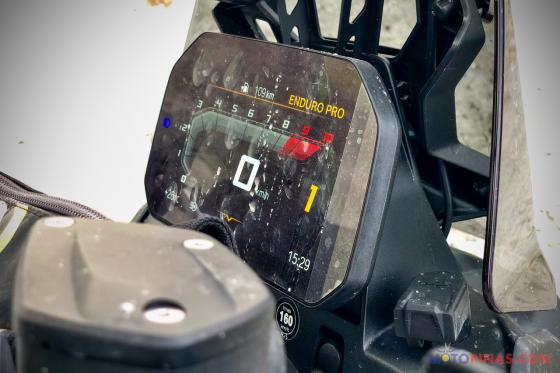
When it comes to putting technology on a motorcycle, BMW Motorrad is probably one of the best, if not, the best in the business. For the demo unit we enjoyed riding, there were a total of 5 riding modes present: Rain, Road, Dynamic, Enduro and Enduro Pro. Out of the 5 riding modes, you can only toggle between the 4 remaining modes in the F 900 GS’ 6.5-inch TFT screen with Bluetooth connectivity.
Additionally, the F 900 GS is equipped with Dynamic Traction Control DTC, the ABS Pro and the dynamic brake light.
Like an enduro bike
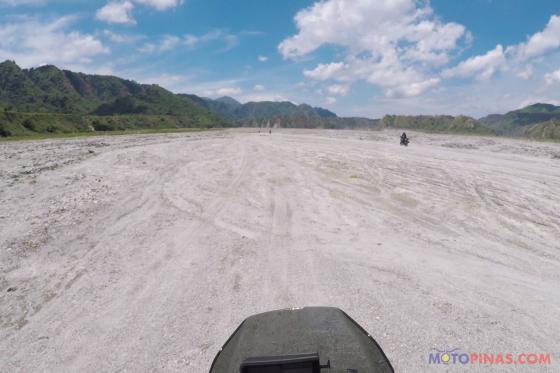
Destination: Mt. Pinatubo
When I received a message from our friends at BMW Motorrad Philippines that an F 900 GS demo bike was ready for review, I felt like a kindergartener who was so excited about tomorrow’s field trip and couldn’t sleep for the night. The day I picked up the bike in Greenhills, I was instructed to take it easy and was specifically told “bawal ang counted.” Bawal means forbidden. On the other hand, “counted” – in Pinoy off-roaders’ slang – means to drop the bike: 1 drop = 1 point; 3 drops = 3 points and so on. The demo bike with literally just a few kilometers on the dashboard and without crash guards, is forbidden to be dropped.
With an evil grin on my face, I took the bike from BMW Greenhills’ basement parking to EDSA’s slow-moving traffic. Well, this is nice, considering that the first few hours with the bike is what I call “Getting to know each other” – in reference to the 1996 Ariel Rivera song of the same name.
Starting slowly with the Road mode on, it felt like the bike had no power and lacked the grunt that I was expecting from a 900 cc machine. But that’s ok, it’s traffic anyway and I don’t need that much engine power to crawl on EDSA’s rush hour traffic. What I noticed though, is that I can easily flick the F 900 GS in and out of the pile of vehicles trying to squeeze in every EDSA space they could get. It was light and nimble – not scooter-ish, but it was light and nimble for a 900 cc bike. I got home, feeling a bit disappointed with the bike’s awful power delivery. Or so I thought.
Two days later, I hopped on the F 900 GS again, this time, it was time to join a couple of friends who were about to ride their adventure bikes to one of the Philippines’ most unforgiving places: Mt. Pinatubo.
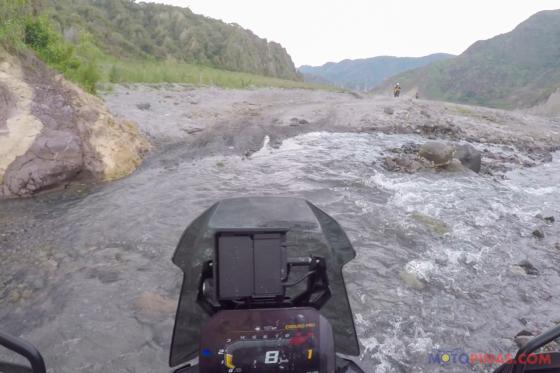
I didn’t sign up for this adventure ride because 1) bawal ang counted due to 2) the demo unit has no crash guards. But it got me thinking: I cannot establish the F 900 GS as a capable, off-road-biased adventure bike like those in BMW's brochure if I’m only going to ride it to the nearest Starbucks or some Instagrammable location with some brown soil as background, right?
So off I went to the usual meeting place at Petron NLEX. Still reeling from what I thought was a bad performance by the new bike, I suddenly realized that I was stupid because I had yet to tinker with the F 900 GS’ riding modes.
Lo and behold, after I selected Dynamic as riding mode while on the traffic-less Harbor Link, the F 900 GS’ engine made a complete 180 and I immediately felt the grunt of all of its rated 105 horses. It was like a totally different bike with its Akrapovic screaming to all the vehicles that I passed by “Hey, this is a liter bike!”
The F 900 GS’ quick shifter also played crucial with my newfound enjoyment of this free-spirited riding on the expressway. The windshield which probably has the same height as a Dakar Rally bike’s tower, was surprisingly good at deflecting wind and I was not trying to hang on to the handlebar at all. The standard handguards also helped deflect some wind off my hands and I know it will do more than that once I take the bike off-road.
While waiting for the others at Petron NLEX, I played around with the settings and found out that I could activate the Enduro Pro. With Enduro Pro, I can adjust the throttle response based on my preference, as well as the ABS and Traction Control intervention. Being an enduro rider myself, I set the throttle response to Dynamic for full power and grunt even on off-road, with the ABS and Traction Control to the bare minimum. Take note, this setting of Enduro Pro was reserved for Mt. Pinatubo.
When the group took off from Petron, we saw ourselves dashing all the way to Clark to the newly-opened Sacobia River Bridge that connects New Clark City to SCTEX. Within minutes, we’re at the trailhead to Mt. Pinatubo in Capas, Tarlac.
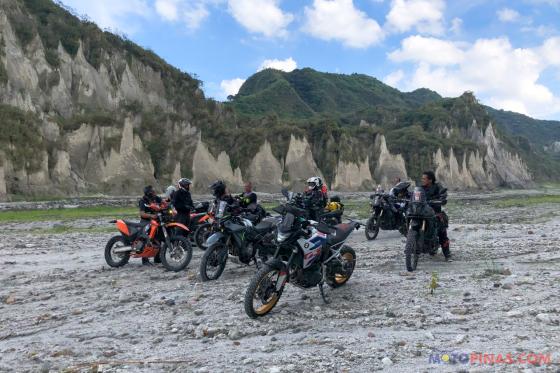
Checking on the stalled KTM
I hoped that the weather had blessed us with some rain the night before so that the terrain would be a bit compact. But no, the locals said that the last rain was about a week ago and the lahar returned to its powdery state with a lot of soft sections.
To those who haven’t experienced riding on lahar (or sand), momentum is the key to keeping the bike afloat. If you ride slowly, you’ll be wrestling with the bike to keep it upright and avoid sinking on the soft sand. Riding too slow would have the rear wheel digging on the sand – again, sinking the bike on the soft sand. In both ways, you’ll tire yourself down.
Since pretty much everyone in the group were experienced off-roaders and had been to Mt. Pinatubo multiple times, we were all gunning it towards Mt. Pinatubo, with the F 900 GS set to Enduro Pro riding mode feeling right at home. On the soft sections of the lahar trail, there were already ruts that act like a rail that could redirect the front tire and cause a rider to lose control of the bike. While some of the bikes fell down on these ruts, the new F 900 GS was just floating. I was not at all fighting with the handlebar every time the front wheel ‘rails’ in the sand ruts, thanks to the F 900 GS’ steering damper.
I was really hoping that I could adjust the suspension settings to my preference, but the demo unit only offered adjustment to the rear suspension’s preload. I’m not a 6-foot-something 92-kilo guy, so I find the factory suspension settings a bit stiff. But that’s ok, the F 900 GS and its suspension system still chewed Mt. Pinatubo’s volcanic rocks and bumps with great ease. It also helped a lot that the stock tires are the big-knobby, enduro riding-oriented Karoo 4 from Metzeler. Riding on lahar or mud (in some sections) is just like riding an enduro bike.
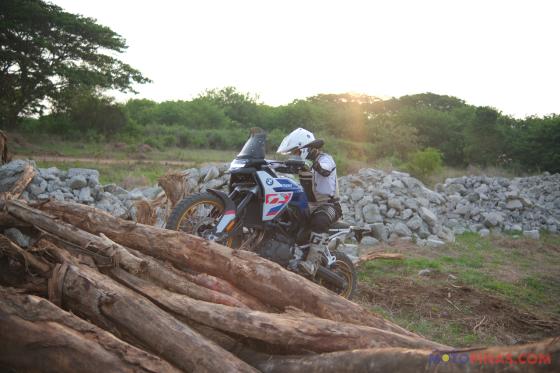
CDS Trails at Arden Botanical Gardens
I did drop the F 900 GS on the more technical sections of the trail. Twice. It is still, after all, a 900 cc, fire-breathing adventure bike. According to BMW Motorrad, the F 900 GS tips the scales at 219 kilograms, full tank and with all of its oils and other fluids ready to rock and roll. I estimate that its dry weight is somewhere between 195 to 200 kilos. On paper, this makes the F 900 GS’ wet weight about 15 kilograms heavier than Yamaha’s Tenere 700 (T7). However, with our experience in the FJMOTO Mountaincross Adventure, it always took at least 3 grown-ass riders to lift a T7 from its side. That wasn’t the case for BMW’s F 900 GS as I was able to lift the bike on my own.
Was it heavy? Yes, of course! But I think the weight distribution on the F 900 GS is much better than the T7. On the T7, all of its weight seems to sit on top of the bike, while the F 900 GS enjoys a much-balanced weight distribution.
The final 2 or 3 kilometers leading to Mt. Pinatubo’s trek are the most difficult and technical. This narrow path for trekkers can barely fit a light enduro bike because of the boulders present and tight switches. When I say ‘boulders’, I’m talking about rocks the size of a microwave oven up to the size of a large SUV along the path.
I’ll be honest: my heart tells me to keep riding the 895 cc F 900 GS like it was an enduro bike to the gnarly sections up to the 1-kilometer marker of the Mt. Pinatubo ascent and snap a photo as proof that it is by far the biggest displacement motorcycle (as far as we know) that was able to reach that point.
But without the crash bars, this unit might as well be considered sold to me. I’m already fine with a BMW Mottorad-forgivable 2 points and would prefer not to add another point or two. I had to settle in the area where the 4x4 vehicles park and wait for the group. At around 3 PM, we saw ourselves dashing as we back-tracked the lahar trails and returned to civilization.
Budol bike
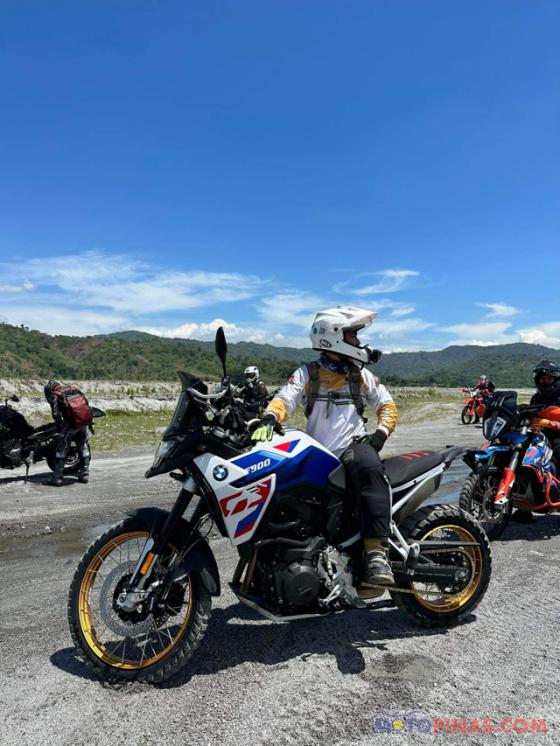
Photo courtesy of BOSS Pao Lazareto
Should I own an F 900 GS, the first thing I’ll do is to reposition the Akrapovic exhaust can inward because it is too pronounced to the side. One simple drop could dent the Akra badly. Another thing that I would do is to change both the shifter and brake pedals to foldable ones. The last thing I would want during an adventure ride is a broken brake or shifter pedal.
I’ll also upgrade the signal lights to something that’s not sticking out and can break in the event of a bike drop. And of course, I’ll put crash guards, a thicker skid plate and some protectors on the LED lights and its quick shifter mechanism.
With all the lahar riding we did plus the expressways, the F 900 GS still managed to return an impressive 20 kilometers per liter of fuel economy – and this was not based on the bike’s dashboard info, but from a full tank to full tank method. This also means that the F 900 GS’s 14.5-liter tank could yield at least 290 kilometers in one top-up, maybe even further if you’re light on the throttle.
Most adventure bikes have the oil filter facing the front wheel exposed to the elements
The F 900 GS offers a more balanced power and torque delivery across the rev range vs its predecessor F 850 GS. In fact, power and torque are already available even on the lower rev range, signifying that it is more of a big enduro bike than an adventure bike. The F 900 GS also handles a lot better and the overall riding characteristic is worlds apart from the F 850 GS it replaces.
BMW Motorrad definitely did a great job in putting together the F 900 GS. This bike ticked a lot of boxes of someone who is into enduro riding and likes to ride an adventure bike onto some of the hard stuff, which is me.
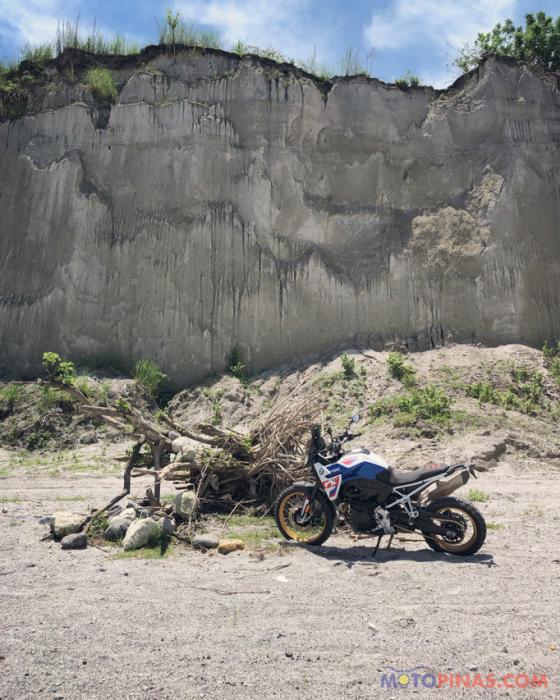
Is the F 900 GS fast? Yes. It can go up to over 200 kilometers per hour in a beat. Is the F 900 GS light? Yes, considering that it is almost a liter bike but I can still lift it by myself. Does the F 900 GS look good? As they say, “beauty is in the eyes of the beholder,” and as an enduro rider myself, all bikes with a 21-inch front wheel, have long suspension and look rugged are beautiful in my eyes. So yes, the F 900 GS looks damn good.
Is the F 900 GS a good replacement for the R 1250 GS or R 1300 GS? No. As I’ve mentioned above, the larger bikes and their boxer twins are built for the long haul, offering lots of wind protection, comfort and almost double the fuel capacity of the F 900 GS. The “F9” is a good additional bike for budol rides, if you already own any of the larger boxer twins.
Speaking of budol, is the F 900 GS a budol bike? Yes! I think I have abused the bike pretty good to say that the F 900 GS can go head-to-head with the other middleweight adventure bikes on budol adventures. Budol in off-roaders’ slang means to take someone on gnarly and often difficult trails - like the ones in the FJMOTO Mountaincross Adventure.