Beware of fake NCAP texts and how not to be a victim
Scammers are getting better at making fake websites look like the real thing. Their goal is pretty simple, and that’s to get you to hand over sensitive information such as your name, credit/debit card number, GCash and other personal data.
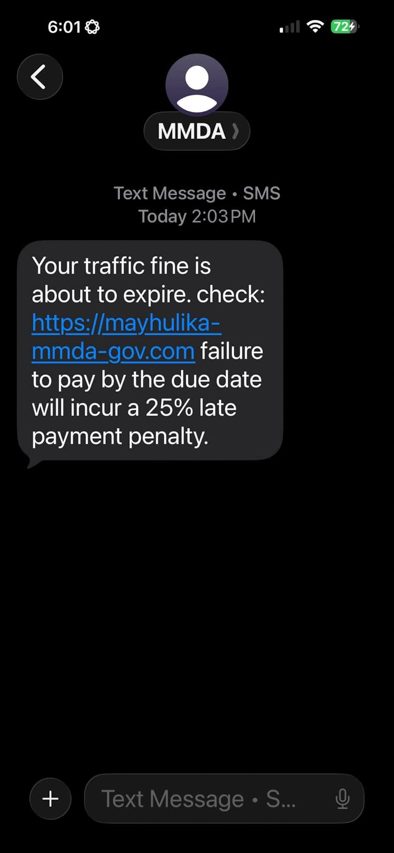
Motorists, including motorcycle riders, are now among their targets, with scam text messages claiming that the recipient has an outstanding No Contact Apprehension Policy (NCAP) violation that needs to be paid through a link. (What is NCAP by the way? Read more: MMDA NCAP 101: what it is and how it works)
It may look official, but clicking that link and entering your payment or personal information could put your bank account and other financial details at risk.
So, how do you know if that NCAP text is legit?
What the MMDA says
The Metropolitan Manila Development Authority (MMDA) has identified several red flags motorists should look out for when receiving an NCAP notification.
1. It should come from “MMDA_NCAP”
According to the MMDA, official NCAP text notifications are sent only from “MMDA_NCAP.”
There’s another important detail, though. The notification system can only send messages to motorists who have an existing account on the agency’s vehicle portal and have explicitly consented to receive notifications.
If you don’t meet those conditions, treat the message as a scam.
2. Absolutely no payment links
A legitimate NCAP notification from the MMDA will not contain a link directing you to a payment page. Scammers commonly use links that lead to fake websites designed to look like official MMDA pages. Once there, you may be asked to provide personal or financial information. And that’s where things can get ugly as these scammers could get access to your finances.
3. No late-payment penalties or surcharges
Scam messages often try to rush motorists into paying by claiming that an NCAP violation will come with additional penalties or surcharges if it isn’t settled immediately.
The MMDA says legitimate NCAP violations do not carry late-payment penalties or surcharges. An unpaid violation may instead cause additional hassle when you renew your vehicle’s registration.
4. Your name shouldn’t appear in the notification
Including your name is another way scammers try to make a fake message look legitimate. How did they get that, we don’t know. The MMDA says official NCAP notifications will not include the name of the vehicle owner or registered owner.
So, if you get an NCAP text telling you to click a link and pay an urgent fine, don’t panic and, more importantly, don’t click.
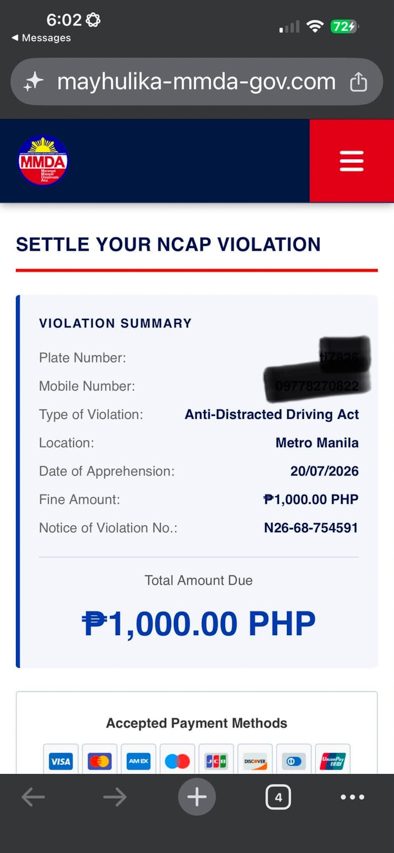
What cybersecurity experts say
You don’t need to be a cybersecurity expert to spot many of these scams. A few basic precautions can go a long way.
1. Check the language and grammar
Poor grammar, strange wording, spelling mistakes or awkward translations can be warning signs.
But don’t rely on grammar alone. Scammers can now produce convincing messages, while legitimate agencies can also make the occasional typo. Still, unusual language should be treated as an automatic red flag.
2. Don’t click. Delete.
If a text looks suspicious, don’t click links, open attachments or reply to the message.
Delete it instead. This removes the temptation to open the link later and potentially enter sensitive information on a fake website.
3. Check the website address carefully
If you want to find out if you have a legitimate NCAP violation, go directly to the MMDA’s official NCAP website:
mayhulika.mmda.gov.ph
Or, through the government’s eGovPH superapp.
Don’t use the link included in a suspicious text message.
Also check the website address carefully. Extra words, hyphens, strange domain extensions or other small changes can be signs that you’re looking at a fake website.
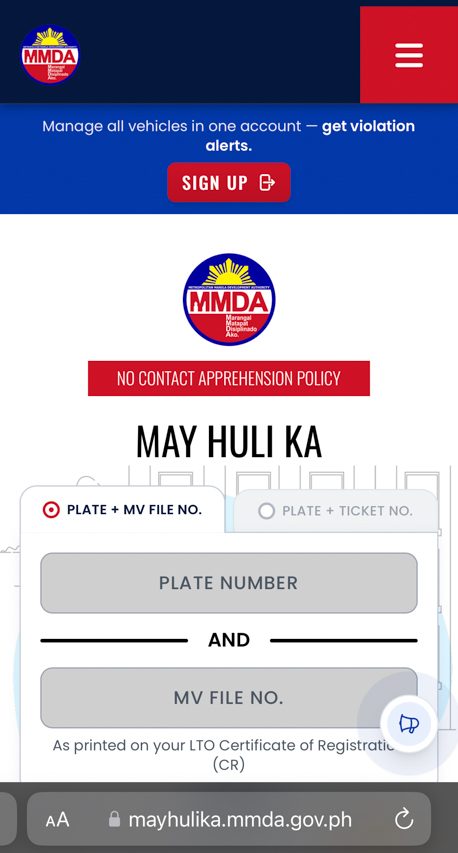
4. Verify through the official website
Once you are on the official MMDA NCAP website, simply enter your license plate and MV file number found on your Certificate of Registration (CR). Fake websites lack access to LTO records, which is why they resort to bogus violations and instant payment links.
If you genuinely have an outstanding penalty, always stick to the official payment channels provided by the MMDA.
5. Always assume it’s fake
An NCAP notification should never be a reason to give away your credit card number, online banking/GCash credentials, passwords, PINs or one-time passwords (OTPs). Don’t assume a website is legitimate just because it has an MMDA logo, familiar colors or a layout that looks official. Those things are easy for scammers to copy.
6. Don’t let these text messages scare you
Scammers want you to act before you have time to think. Messages saying your fine will suddenly increase, your account will be suspended or you have only a few hours to pay are designed to create panic.
Stop. Verify. Then act.
If you’re worried about a possible NCAP violation, check it yourself through the official MMDA website instead of following instructions in an unsolicited text message.
And perhaps the easiest way to avoid constantly wondering “May violation ba ako?” is to simply follow the traffic rules whenever you’re riding your beloved steed.