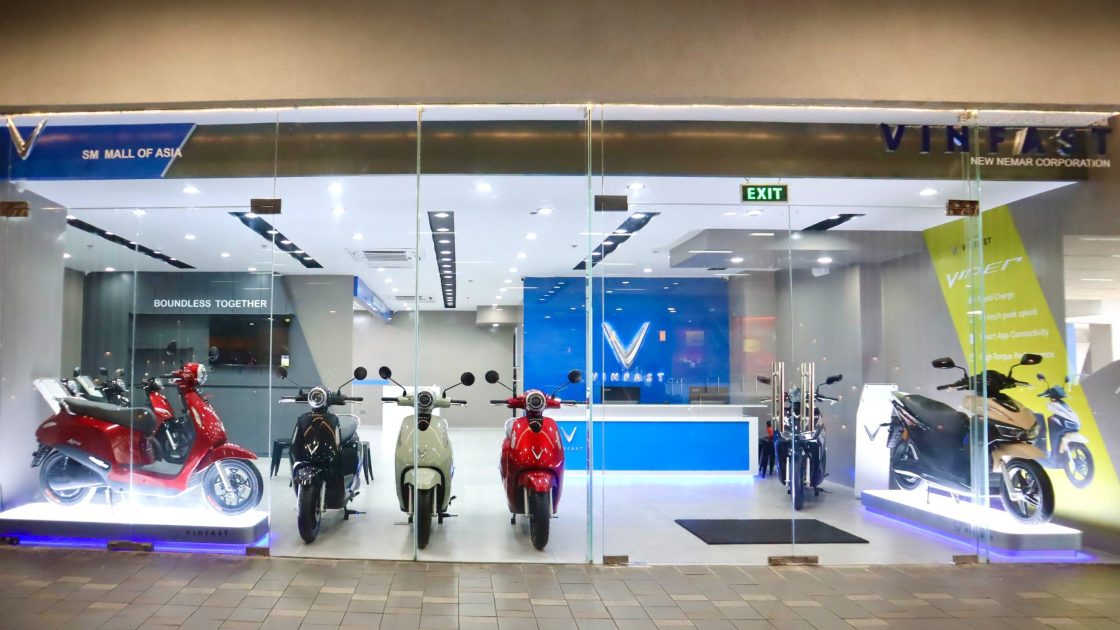
VinFast to present EVO, Feliz II and Viper e-scooters to Juan dela Cruz
A couple of weeks ago, we joined our moto media and content creator friends in beautiful Vietnam for a special sneak peek at three upcoming e-scooters from VinFast, models that could soon become a common sight on Philippine streets starting in July.
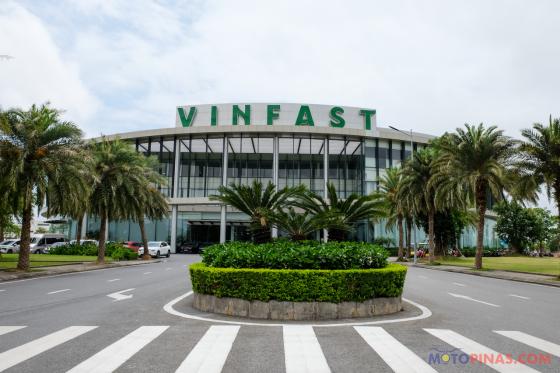
According to VinFast, the Philippine-spec versions of its upcoming e-scooters won’t be the same ones sold in Vietnam. The models headed for our streets will come with more powerful motors, and higher top speeds. Why the extra punch? We’ll get to that later. For now, the three scooters set to arrive locally are the EVO, Feliz II, and the range-topping Viper.
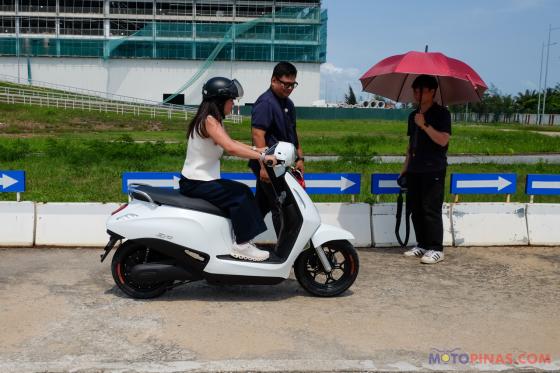
EVO
Starting the lineup is the EVO, an electric scooter powered by a hub motor with a max rated power of 5,200W, enough to push it to speeds of up to 80 km/h (on two batteries). It comes standard with a 400W charger, while buyers can also opt for a faster 1,000W charger that significantly cuts charging time from the standard 4.5 hours.
But beyond the performance figures, the EVO’s biggest head-turner is its styling. With its unmistakably Vespa-inspired silhouette and retro-modern lines, the scooter immediately stands out from the usual commuter crowd.
Personally, the EVO ended up being my favorite during our short test ride inside VinFast’s Hai Phong facility. The best way to describe it? Imagine the agility and easy handling of a Honda Click 125, but with a lighter, more playful feel that makes the scooter surprisingly fun to throw around. This is also expected to be the most affordable in all three VinFast e-scooter models coming soon, with an estimated SRP of hovering around PHP 60K to 65K only.
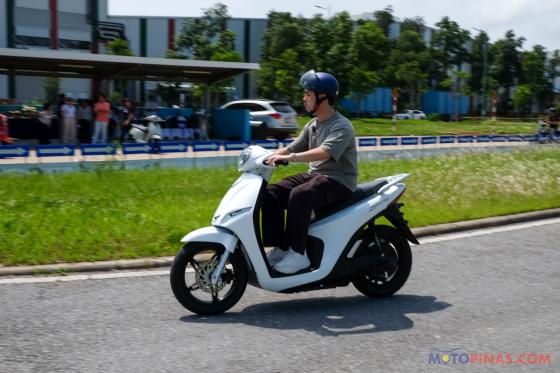
Feliz II
Second in the lineup is the Feliz II. I was able to briefly ride the scooter during the demo, although the unit provided was a “VDM,” or Vietnamese Domestic Market version, which is equipped with a more malambing motor setup compared to the Philippine-spec model.
According to VinFast, the Feliz II is aimed at riders looking for a more refined and comfortable urban commuter. Compared to the EVO, it gets a larger and more premium-looking body, giving it a more stable and confident road presence.
Also during the test ride, many have commented on the Feliz II’s smooth acceleration, predictable handling, and surprisingly good ride comfort over rough surfaces, making it feel more like a practical everyday commuter built for city use.

Viper
Completing the lineup is the range-topping Viper. The Philippine-spec version will also come with a hub motor with a max rated power of 5,200W, and a top speed of up to 90 km/h (in dual-battery setup). At first glance, the Viper’s sharp and sporty styling even gives off strong Honda Click vibes, at least for me.
According to VinFast, the Viper is the most performance-oriented scooter in the lineup, delivering quick acceleration, responsive handling, and strong uphill performance while still remaining practical enough for daily commuting.
Why bigger motor?
Actually, the EVO, Feliz II, and Viper all use the same IP67-rated hub motor with 5,200W of peak power. That is noticeably more powerful than their VDM counterparts, which only get around 2,450W to 3,000W. They also come equipped with disc brakes and full digital instrument panels.
According to VinFast, the Philippine-spec models received the power bump because Pinoys are generally “bigger.” At first, I honestly thought they meant taller or more muscular than the average Vietnamese.
But after landing back in Manila and looking at my kababayans, I realized they probably meant heavier because, let’s face it, our collective love affair with fast food, milk tea, unli-rice, and sugary snacks is already showing the obvious. So yes, the extra power might actually make sense after all. And if you happen to be on the slimmer side, then congratulations, you’ll probably enjoy the EVO, Feliz II, and Viper’s instant torque even more.
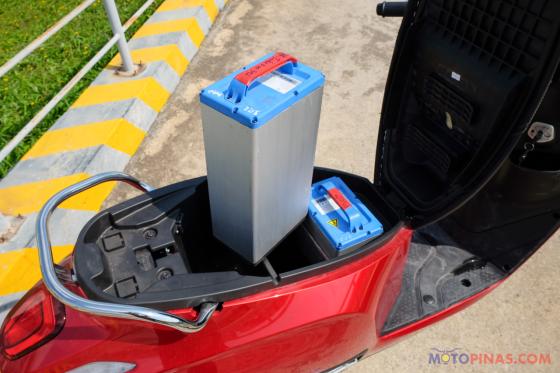
Battery swapping ecosystem
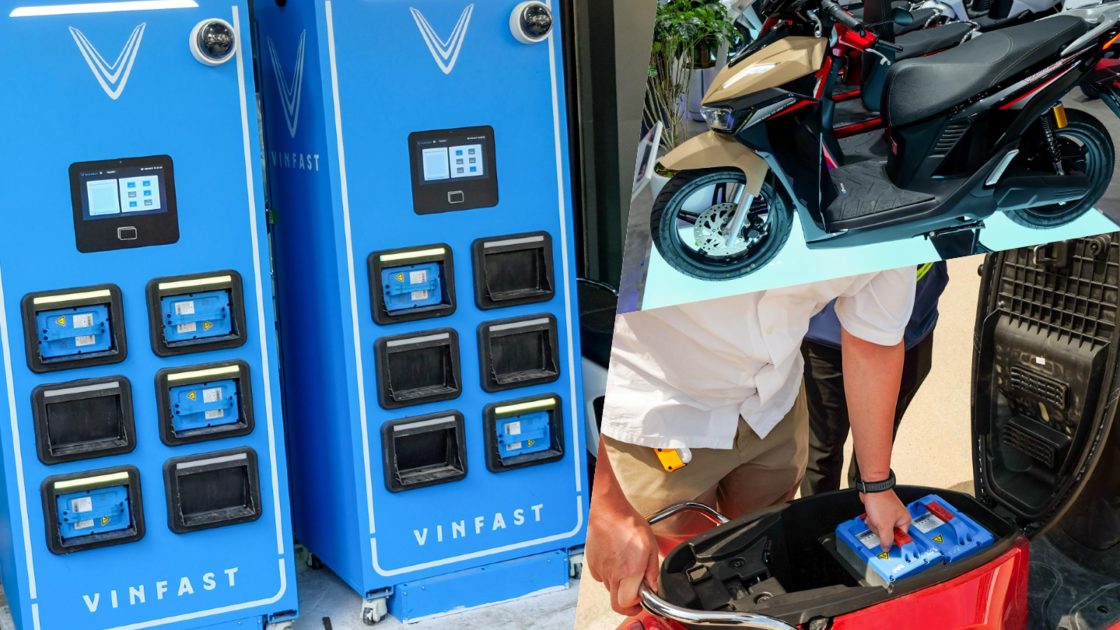
Honestly, from what I can see, the biggest selling point of these VinFast e-scooters is not even the styling or the instant torque, it is the battery swapping ecosystem.
I mean, I’d gladly retire my old fossil-fuel-burning scooter tomorrow if range anxiety completely disappears. Personally, I do not care if the design looks like a Vespa, a Click, or something from Tron, as long as it reliably gets me from Point A to Point B without the terrifying possibility of pushing a dead e-scooter under the scorching Manila sun.
And if VinFast manages to combine affordable pricing, accessible battery-swapping stations, lower running costs, common parts availability, and decent warranty coverage, then yes, it could slowly chip away at Honda’s long-standing grip on the local scooter market. Because for many Filipinos, this is not about “saving the planet.” It is about saving money.
Less maintenance means fewer headaches. Lower operating costs mean more food on the table, tuition fees paid on time, and maybe a little extra breathing room in daily life, something many Filipinos still struggle with.
VinFast says it plans to deploy 30,000 battery-swapping stations nationwide. Sounds impressive. But then again, this is still the Philippines, where even good ideas sometimes die slowly in a swamp of government permits, red tape, and endless bureaucratic haggling.