Automated Shift Assistant soon on BMW motorcycles
Automatic transmission has become the standard in the automotive industry but it’s not the case in the motorcycle industry. Though automatic transmissions on motorcycles are not new, it is slowly gaining traction these days and more companies are putting this technology into their models.
The latest is BMW Motorrad.
Automated Shift Assistant (ASA)
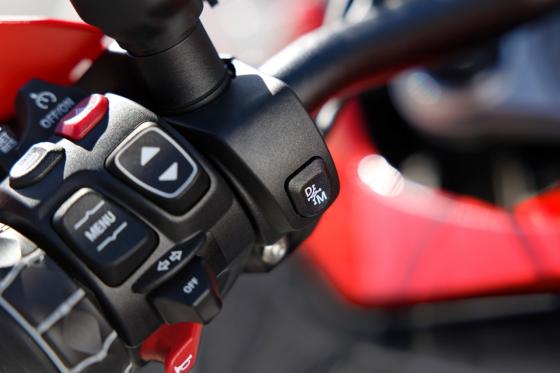
According to BMW Motorrad, the new Automated Shift Assistant (ASA) presents an innovative technical solution to make riding simpler and more comfortable. True to the motto “Simplify your ride”, the riding experience is further enhanced by the automation of the clutch and gear shifting, without sacrificing the emotionally important dynamics of shifting.
The ASA features a clever functional design in which two electromechanical actuators automate the clutch and gear shifting of the six-speed transmission, which is the main difference from a conventional shift assistant. There is no need for a hand lever to operate the clutch manually. Starting, stopping, and maneuvering are made easy with the Automated Shift Assistant.
The ASA features two modes: D and M. “D” is comparable to car’s Drive, where all the gear shifting is handled by the system. The “M” mode is for semi-automatic mode, where the shifting is done by the rider through the shift lever on the left footpeg.
BMW Motorrad adds that the ASA takes out some of the load from the rider, especially in difficult riding conditions. Thus, the rider can concentrate more on the throttle and don’t have to worry about clutch control.
Electromechanical clutch and gearshift actuators
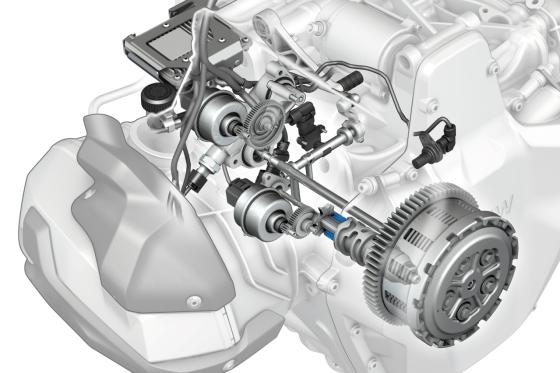
The ASA is the logical and technical evolution of the BMW Motorrad Shift Assistant Pro. Two electronically controlled electromechanical actuators operate the clutch and gearshift, enabling easy starting and automated gear changes. The rider’s shift request is transmitted to the control unit via a gearshift lever sensor, which is actuated by the conventional foot-operated gearshift lever. Additional sensors determine the revs of the transmission input shaft and the clutch position. These values are transmitted to the TCU (Transmission Control Unit), which is closely linked to the engine control unit, for modulating and controlling the clutch, shift actuation, and status.
The clutch is operated by an electro-mechanical actuator combined with a hydraulic system with a direct hydraulic connection between the clutch master and slave cylinders. The actuator regulates the required clutch slip, engages the clutch when changing gear and disengages it when stopping.
Expect this new ASA system on future BMW models with boxer engines.