176 km/L engine developed in India
Scooters and other small motorcycles are engineered primarily for fuel efficiency. Our neighbor, India, has reportedly developed an engine that takes this a step further, with a claimed fuel efficiency of up to 176 kilometers per liter (km/L). To put that into perspective, imagine your Honda Click 125 scooter with a 5.5-liter tank could potentially travel up to 968 kilometers—that’s the distance between Manila and Baybay City in Leyte, in just one full tank!
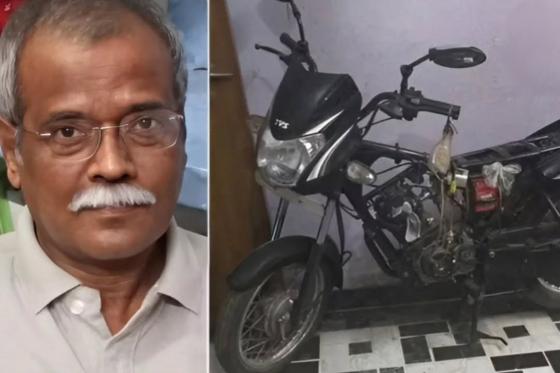
According to a report by the Hindustan Times, Shailendra Shingh Gaur, an alumnus of Allahabad University in India, has received a patent for a six-stroke engine that claims immense fuel efficiency. In one of the experiments Gaur conducted, a 2017-model TVS motorcycle with a 100cc engine was used and ran for 35 minutes on just 50 ml of gasoline, which is the basis for the remarkable 176 km/L efficiency figure.
Gaur claims that his six-stroke engine is three times more efficient than a standard four-stroke engine of similar displacement, utilizing up to 70% of the energy from burned gasoline. In a public demonstration on a local television show, the engine achieved a fuel efficiency of 120 km/L.
Six-stroke engine
These days, most cars and motorcycles are powered by a four-stroke engine, using a simple, four-step cycle, hence, “four-stroke.” First, it draws in a fuel-air mixture. Second, it compresses it. Third, a spark plug ignites the mixture, creating a small explosion that pushes the piston down in the power stroke. Finally, the piston rises to expel the exhaust gases in the exhaust stroke, preparing the engine for the next cycle.
Now, a bit more complicated, a six-stroke engine will have two more strokes, to better capture wasted energy. After the standard power stroke, a six-stroke engine can either add a second power stroke using water injection to create steam, or it can perform a second exhaust stroke to ensure all gases are expelled. This extra work helps the engine recover more heat and pressure that would normally be lost, leading to greater fuel efficiency and reduced emissions compared to a four-stroke engine.