Marcos: Country has 50-day fuel stockpile amid Middle East tensions
Tensions in the Middle East are rising and show no sign of easing anytime soon. For the Philippines, which relies heavily on oil imports from the region, this could push fuel prices sharply higher, and in a worst-case scenario, trigger another fuel crisis if shipments are delayed or completely halted.
But how bad could it get? According to President Ferdinand “Bongbong” Marcos, Jr. (PBBM), the country currently has enough fuel to last at least 50 days, assuming normal daily consumption and no panic buying from industries and average consumers.
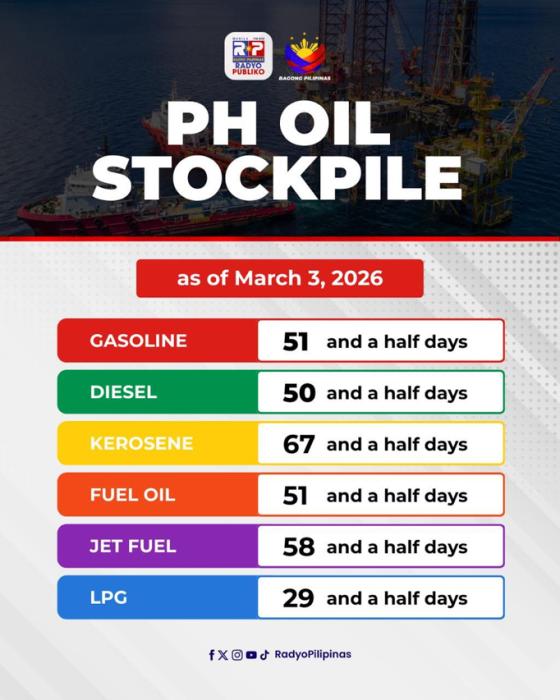
In a recent briefing, the President assured Filipinos that the country has sufficient fuel reserves to last at least 50 days. According to the President, the current stockpile includes 50½ days of diesel and 51½ days of gasoline.
Other fuel reserves are also healthy: 67 days of kerosene, 51½ days of fuel oil (likely bunker fuel for industries), 58½ days of jet fuel, and 29½ days of LPG.
What can we do to lower fuel consumption?
While there’s little we can do to influence the conflict in the Middle East aside from hoping for peace, we can still take steps to reduce our own daily fuel consumption. For us two-wheel riders, that’s already a good starting point. Motorcycles generally use far less fuel than cars, pickups, or SUVs, putting us naturally on the more fuel-efficient side of the road.
Still, there are simple habits we can adopt to stretch every drop of fuel even further, especially with the possibility of an oil crunch (hopefully not) looming on the horizon.
For daily commuters, the simplest way to cut fuel consumption is… not to commute at all. Take advantage of work-from-home (WFH) arrangements whenever possible. No riding or driving means no refueling. Also, you may want to cut down on weekend or late-night joyrides with your motorcycle club for the time being.
If WFH isn’t an option due to your industry or job requirements, the next best approach is to optimize your travel. Plan the most fuel-efficient routes using apps like Google Maps or Waze, and try to accomplish multiple errands in a single trip to avoid back-and-forth riding.
You may also want to dial back the aggressive riding since your daily commute isn’t a MotoGP title fight. Accelerate smoothly, brake early and gently, and keep your throttle inputs steady. You’ll be surprised how a small change in riding habits can make a big difference in fuel consumption.
Even way better? Switch to biking. It’s healthy, truly eco-friendly, and completely fuel-free. Just make sure you’ve been cycling regularly for a few months beforehand, so your body can handle the transition to daily bike commuting without a shock.