VinFast heads to PH with affordable e-scooters and 30,000 battery swap network promise
If you’re riding around Metro Manila or most cities in the Philippines, it’s clear that scooters dominate the roads. And within that crowd, the Honda Click 125 easily stands out as the go-to choice for many riders.
In Vietnam, Honda remains the dominant force in the overall two-wheeler market. VinFast, meanwhile, has rapidly risen to lead the electric scooter segment and has successfully outpaced other Japanese brands in the overall two-wheeler segment. Despite being relatively new, it has already posted more than 406,000 e-scooters sold in 2025, with demand surging 473% year-on-year.
Back in the Philippines, VinFast is looking to replicate that momentum by offering something many electric scooter brands have struggled to deliver: affordability and wider accessibility.
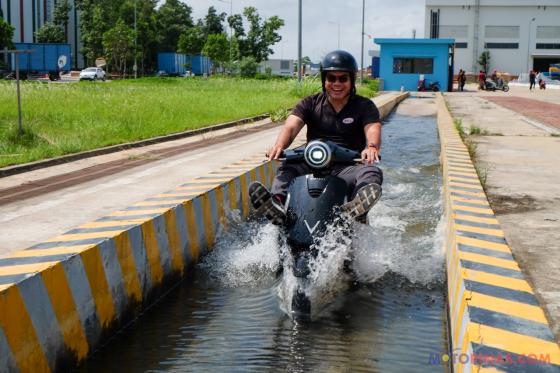
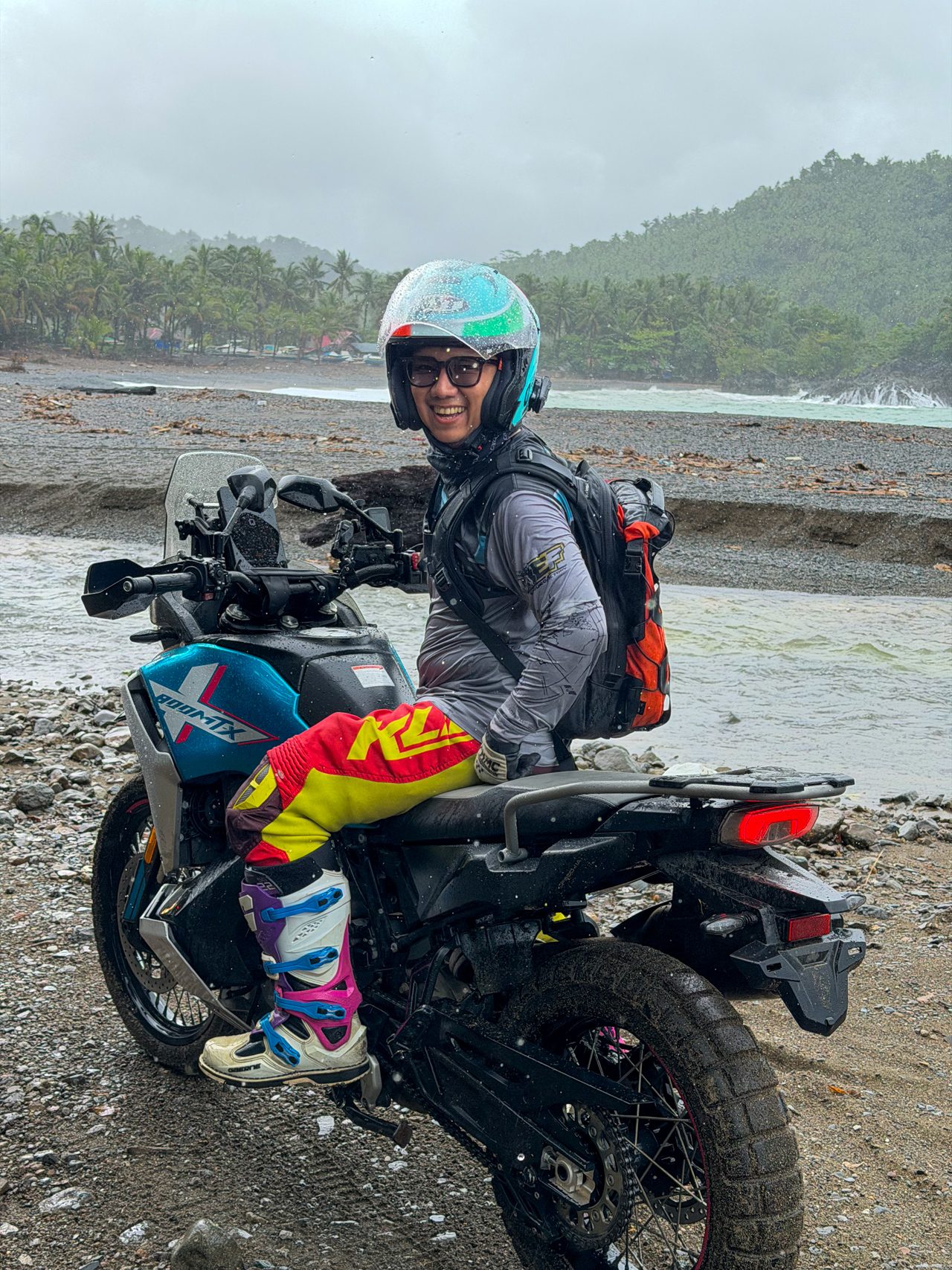
Together with the Philippine media delegation, we tested VinFast’s e-scooters for water-wading capability. Not too deep, but enough to cover the stepboard and submerge the IP67-rated hub motor without any issues.
Affordability
Naturally, for most Pinoys, the first question is always: “How much?”
According to VinFast e-Scooter Philippines, pricing for the local lineup will only be finalized at launch, but in Vietnam, the entry-level EVO is priced at under USD 1,000. Using prevailing exchange rates, this places a rough estimate in the PHP 60,000 to PHP 65,000 range once the EVO reaches the local market.
Then there’s the battery subscription. Owners can either buy the battery outright or opt for a rental plan. In Vietnam, the monthly subscription is roughly PHP 366 when converted to peso, with VinFast e-Scooter PH saying it will stay under PHP 500 once introduced locally.
On top of that, VinFast currently offers a free subscription promo in Vietnam until 2028. If the same setup is applied in the Philippines, early adopters could potentially enjoy battery swapping access without monthly fees for the next two years.
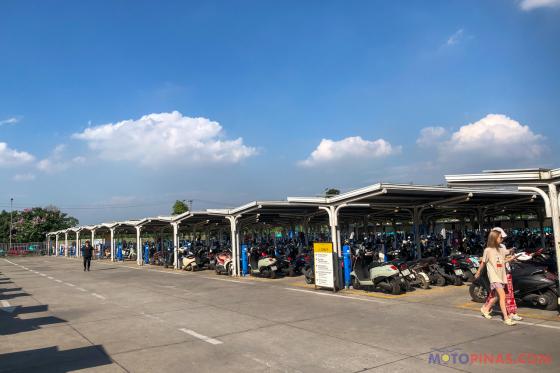
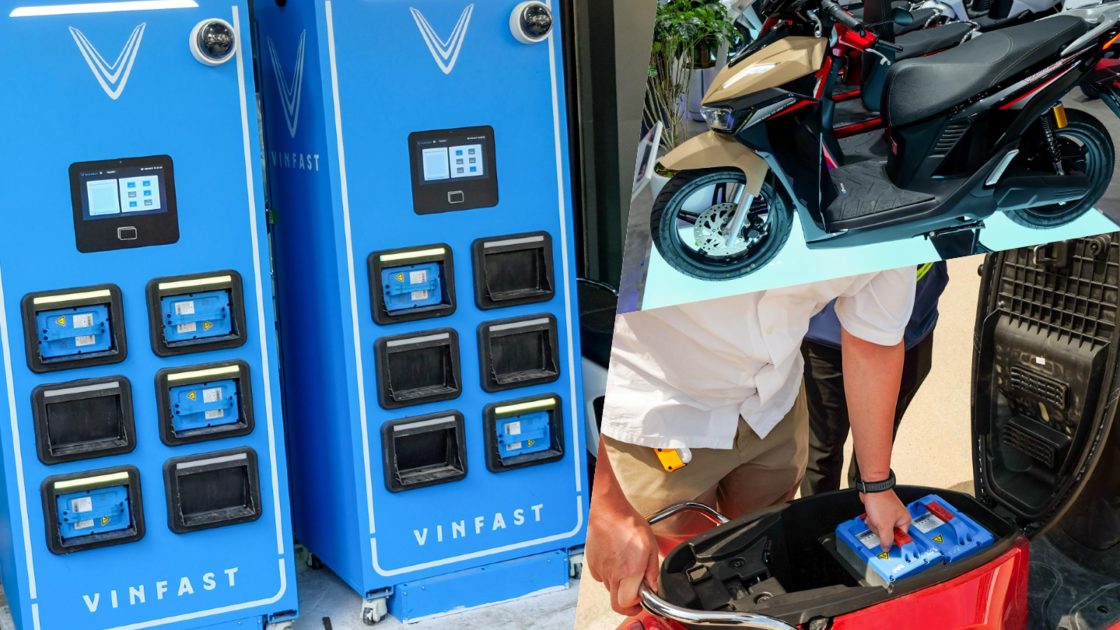
An electric scooter parking area in Vietnam, complete with charging outlets and dedicated battery swapping cabinets.
Accessibility
One of the biggest reasons many Filipino riders still stick to fossil fuel-burning motorcycles is range. Most electric scooters and motorcycles promise around 50 to 60 kilometers of range on a fully charged battery, which easily triggers range anxiety for delivery riders and long-distance commuters, especially those who work in Metro Manila but live in the outskirts.
VinFast is addressing this with a large-scale battery swapping network, targeting up to 30,000 stations nationwide. The plan involves partnerships with motorcycle dealers, major malls, and even gas stations to make swaps widely accessible.
According to VinFast e-Scooter Philippines CEO Niño Fabros, the goal is to have 6 to 12-slot swapping stations available within a 5-kilometer radius, making battery access as convenient as a quick stop, instead of hours in charging stations, anywhere in the country.
Beyond fuel savings, the brand also offers up to 6 years warranty on both the battery and hub motor, which translates to minimal maintenance costs within that period, subject to warranty terms.
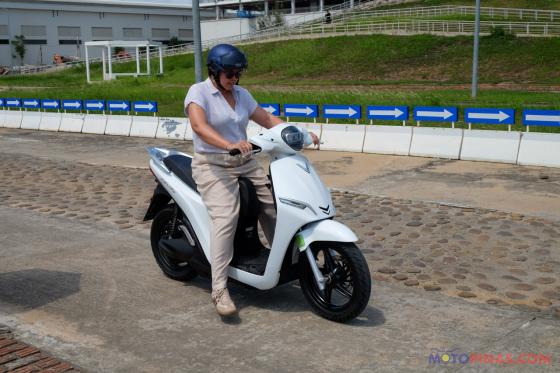
VinFast Feliz e-scooter
Like a motorcycle
In the Philippine context, electric scooters are often lumped together with low-powered “e-bikes” that are capped at around 25 km/h. But VinFast’s e-scooters are in a different league.
Take the entry-level EVO, for example. It can reach speeds of up to 80 km/h and offers a claimed range of up to 156 kilometers using two swappable batteries.
Under the Land Transportation Office (LTO) classification system, these e-scooters fall under the L3 category and are treated like standard sub-400cc motorcycles, requiring full licensing, registration, and safety gear compliance. The good news is that EVIDA Law grants EV owners 30% discount on registration and MVUC fees, making ownership of these L3 e-scooters more cost-efficient than a regular motorcycle.
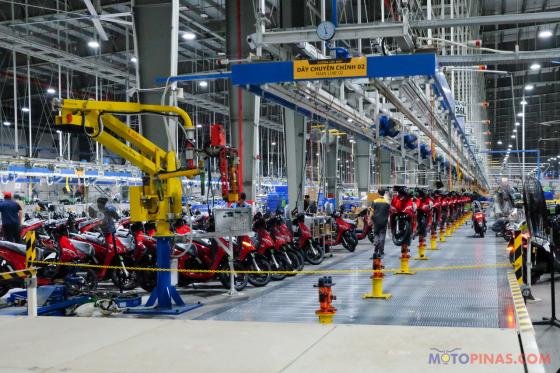
VinFast’s Hai Phong electric scooter manufacturing facility, with an annual production capacity of up to 1.2 million units.
Parts availability
One advantage of owning an e-scooter is the simpler mechanical setup. With fewer core components like the electric motor, battery, BMS, and ECU, there are simply fewer parts that can fail or require regular maintenance.
But what about the rest of the usual wear-and-tear items like brakes, wheels, and suspension components?
In VinFast’s case, a quick look at these consumables already shows that they use common scooter spare parts that are already available in most motorcycle shops. That means replacements and servicing can likely be done without relying too much on specialized casa or brand-exclusive components.
For riders, especially those who prefer doing basic maintenance themselves to save money, that makes e-scooter ownership feel far more practical and familiar.
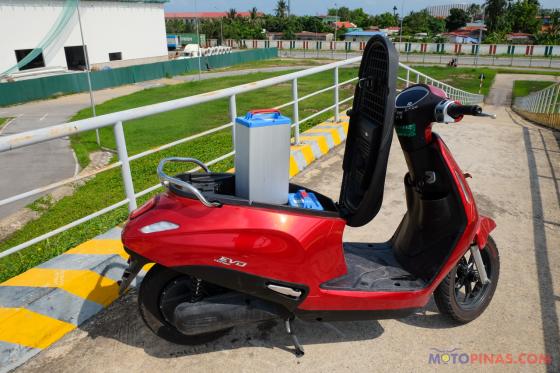
VinFast EVO fitted with dual battery packs, designed for quick battery swapping.
What if
But what if VinFast actually pulls it off?
With fuel prices staying high for who knows how long (thanks to Uncle Sam, BTW), the appeal of electric scooters becomes harder to resist. No gasoline stops, lower running costs, and far fewer moving parts all translate to fewer maintenance headaches over time. Add battery swapping into the mix, removing long charging waits, and daily riding suddenly becomes simpler and more predictable.
Long ride to Baguio? This would no longer mean planning around charging stops. Instead, riders could swap batteries in minutes along the way and keep moving, roughly the same time it takes to refuel at a gas station. This also holds for riders who cover long distances daily for commuting or delivering goods.
If affordable pricing, widespread swapping access, and these cost advantages come together, VinFast could gradually chip away at Honda’s long-standing dominance in the Philippine scooter market. Not through a sudden takeover, but through steady shifts in preference, driven by riders who are simply looking for something cheaper to run and easier to live with. You know, more savings mean more food on the table, tuition fees are paid, and a little more breathing room for everyday needs that many Filipinos still struggle to meet.
Honda still leads the pack. But in a market where every peso spent on fuel matters, the “default choice” for Filipino riders may not stay the default for very long.