We took the HATASU Nero e-bike to our daily errands
Electric bikes or e-bikes, have steadily become a popular choice as a mode of transportation for many Filipinos, especially in the post-pandemic society where commuting via public transport continues to be difficult, not to mention fuel prices becoming more expensive by the day.
Being both a motorcycle rider and also a driver of a family car, the idea of traveling “free of charge” is something new, since there are no refueling, parking and toll fees involved. Thanks to our friends from HATASU, we were able to experience traveling from the perspective of our fellow e-bike users. Best of all, we were also able to experience its advantages and benefits.
Errand bike
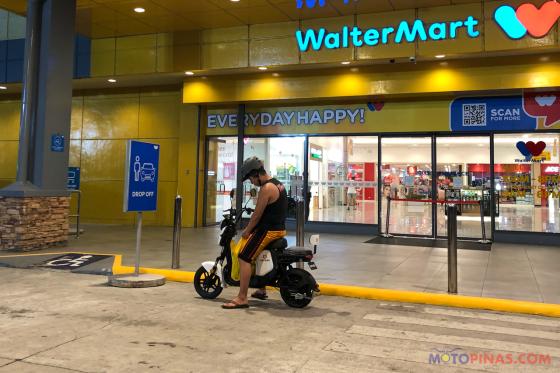
These small e-bikes, by design, are not really commuter bikes, but rather as errand bikes. Since current regulations don’t require registration or a driver’s license for e-bike operators, going to a nearby wet market (palengke) or convenience store is so convenient.
Parking is also not a problem in these establishments, as the HATASU Nero e-bike is so small and compact, that all we have to do is park it somewhere safe and as allowed by friendly and courteous guards.
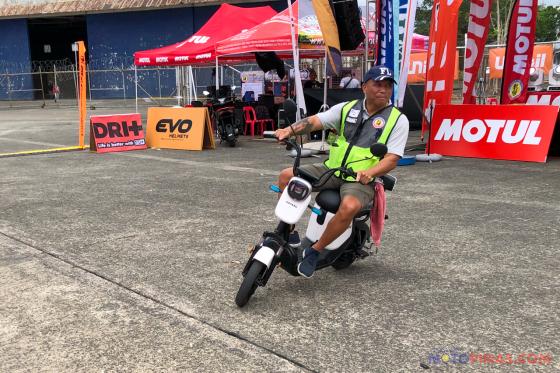
The HATASU Nero e-bike has two riding modes: Mode 1 with a top speed of 35 km/h and Mode 2 with a top speed of 40 km/h
During the recent BOSS Ironman Motorcycle Challenge presented by MOTUL, we used the HATASU Nero e-bike as an errand bike throughout the event area, which is Subic International Airport. For 3 days of bringing supplies to event marshals stationed at key areas and roaming around the large airfield, the HATASU Nero e-bike never missed a beat and only required 1 full battery charge each evening.
As commuter
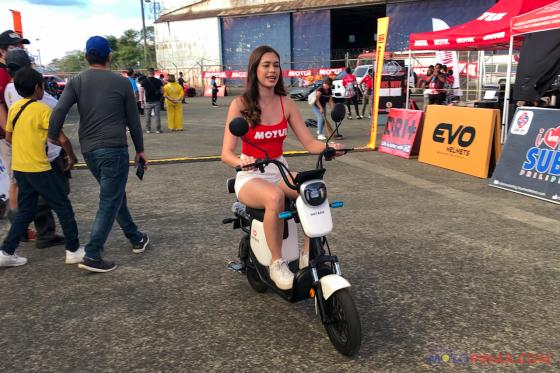
It's operational simplicity makes it ideal even with beginners
Thanks to its 48-volt, 20ah battery coupled with its 400w electric motor, the HATASU Nero e-bike is claimed to be capable of reaching up to 55 kilometers on full battery charge. In our experience, we took the HATASU Nero e-bike to Bonifacio Global City (BGC) in Taguig, which is approximately 26 kilometers from where I live in Las Pinas City.
With its 40 kilometers per hour top speed, we reached BGC in just a little over an hour, riding through bicycle lanes, inclines and stop-and-go traffic. Since it was already dark, the 26-kilometer journey back home required us to turn the HATASU Nero’s LED headlight all the way. At first, we thought that riding with its lights on would drain the battery faster, but no, we arrived home with 2 bars left on panel, which we estimate is enough for another 10 kilometers on a leveled road.
Parking not a problem
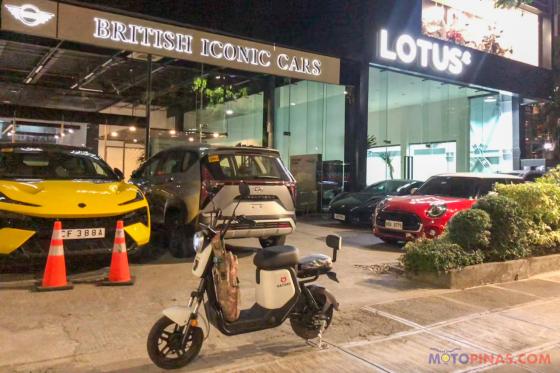
At BGC where they charge premium for a parking space
As mentioned earlier, one of our favorite advantages the HATASU Nero e-bike offers is ease of parking. When riding a motorcycle or driving a car, parking lots in the metro are seldom vacant, especially during weekdays. On the other hand, it’s hard to find a parking spot in malls during weekends and holidays.
This is not a problem for an e-bike like the HATASU Nero.
The HATASU Nero e-bike is small and compact, we would just park it where it is safe and permitted by the guards, usually at a convenient spot within the building’s premises – like the one we experienced in BGC. Otherwise, it’s going to be PHP 50.00 for the first 3 hours of parking and PHP 10.00 for every succeeding hour of parking.
Most grocery establishments offer free parking for e-bikes, while some malls offer free charging at their designated e-vehicle areas. “Charge while you shop” is their slogan.
“Traveling for free”
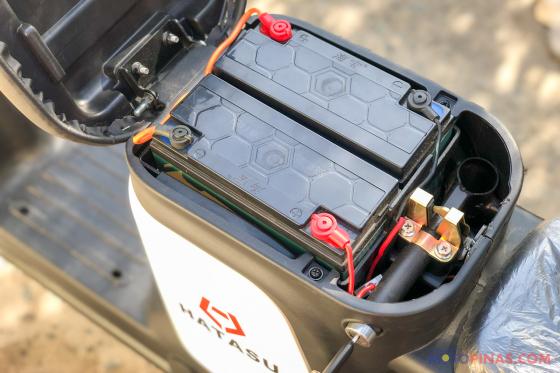
While technically not FREE, charging the HATASU Nero e-bike at home only consumed a very small amount of electricity. If our math is right, the average energy consumption for every 8-hour charging time (full charge) of the HATASU Nero e-bike is just 4 kilowatts or roughly PHP 48.00.
If we plug the HATASU Nero e-bike’s batteries into a renewable power source like solar power, traveling would indeed be “free of charge.”
Government regulation
At present, most e-bikes like the HATASU Nero are classified under L1b of the Land Transportation Office’s (LTO) Administrative Order 2021-039. These e-bikes are capable of reaching speeds of no more than 50 kilometers per hour and are not required to be registered with the LTO. Also, drivers of these e-bikes are not required to possess a valid driver’s license from the LTO.
Having the HATASU Nero e-bike (PHP 28,990 SRP) in our stable is fun and a refreshing experience from the daily encounters of a motorcycle rider. No police checkpoints that target only motorcycles, no discrimination in parking lots, and best of all, ZERO gas expenses.