Unified 911 System launched for faster emergency response
For many Filipinos who grew up in the ‘90s, the primetime series Rescue 911 on RPN 9 was their first glimpse of how a single emergency number could save lives. Hosted by William Shatner, the show dramatized real-life rescues and highlighted the effectiveness of America’s 911 system. Decades later, that concept has finally taken root in the Philippines, where emergency response has long been hampered by a confusing web of hotlines, which often lead to inefficient emergency responses from authorities.
On September 11, 2025, the Philippine government took a decisive step forward with the official launch of the Unified 911 System at the PLDT Command Center in Sampaloc.
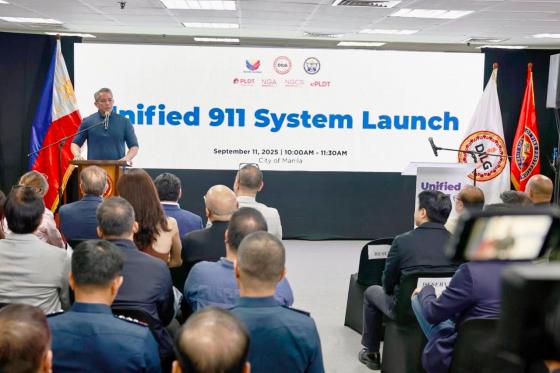
Replacing more than 30 separate hotlines, the Philippines’ Unified 911 is available 24/7, and is language-sensitive, with trained call takers capable of responding in major local dialects. With a target response time of just five minutes, the system fulfills the President’s directive under Bagong Pilipinas: to ensure that every Filipino, in moments of danger, can rely on one promise—help will come.
The idea of a unified emergency number in the country isn’t entirely new. In 2002, Davao City pioneered the use of 911 as its local emergency hotline, the first outside the United States. In 2016, the Duterte administration rolled out a national 911 service to replace Patrol 117. However, the system faced challenges—ranging from limited infrastructure and uneven coordination to prank calls—that prevented it from becoming the seamless service it was envisioned to be.
Why does a Unified 911 matter to riders?
For motorcycle riders, the Unified 911 system is more than just another government program—it’s a lifeline. Two-wheelers remain among the most vulnerable on the road, and when crashes happen, the difference between survival and tragedy often comes down to how fast help arrives. With a single emergency number replacing dozens of hotlines, riders no longer need to waste time figuring out whom to call. One number now connects them instantly to trained responders who can dispatch police, medical, or fire assistance with speed and accuracy. Best of all, it is FREE of charge.
But Unified 911 isn’t only about protecting riders themselves. Motorcyclists, because of their being on the road most of the time as MC Taxis, delivery riders, or simply trying to go from point A to point B, are often the first to witness road crashes or arrive at the scene before anyone else. In those crucial first minutes, the ability to dial one reliable number can save lives, whether it’s summoning an ambulance, alerting authorities to a hazard, or coordinating rescue efforts.
For the riding community, the Unified 911 isn’t just about safety; it’s also about responsibility, too. It gives riders the peace of mind that help is only a call away, while also giving them the power to step up when it matters most, instead of just being another usisero (onlooker) that just adds to the traffic congestion.