Private motorists still left out of government fuel subsidy
Private motorists remain outside the government’s fuel subsidy program as Malacañang focuses its assistance on public transport and other sectors affected by rising fuel prices.
Palace Press Officer, Usec. Claire Castro, said the government is prioritizing programs already announced by President Ferdinand “Bongbong” Marcos Jr., including fuel assistance for public utility vehicle (PUV) drivers and operators, transport fare relief, and financial assistance for low-income families.
The clarification comes as global oil prices remain volatile amid the continuing crisis in the Middle East. The Philippines remains particularly exposed to movements in the global oil market because it relies heavily on imported crude oil and petroleum products.
Asked if the government was considering extending fuel assistance to private vehicle owners, Castro said the matter has yet to be discussed.
At sa ngayon po ay hindi pa napag-uusapan iyong sinasabi ninyong fuel subsidy para sa mga pribado na motorista. Hindi po pa siya napag-uusapan sa ngayon.
(For now, the fuel subsidy you are referring to for private motorists has not yet been discussed. It has not been discussed at this time.)
Castro added that the government would first implement the programs already announced by Marcos before considering additional measures.
Sa ngayon po nakita po natin at nadinig natin kung ano ang mga programa na nais na ipatupad ng Pangulo. So, isa-isahin muna po ito.
The Palace is also studying legislation intended to ease the tax burden on Filipinos, including a proposed expansion of the income tax exemption.
While private motorists are not currently covered, government assistance has been directed at several sectors that depend heavily on fuel for their livelihood or operations.
PUV drivers and operators remain the main beneficiaries of the current fuel subsidy. The Pantawid Pasada Fuel Subsidy Program has been allocated PHP 2.5 billion from the 2025 General Appropriations Act, with the government providing fuel assistance to eligible public transport operators.
Farmers and fisherfolk have also been included in separate fuel assistance programs, while the government has rolled out targeted support for sectors involved in moving agricultural and essential goods.
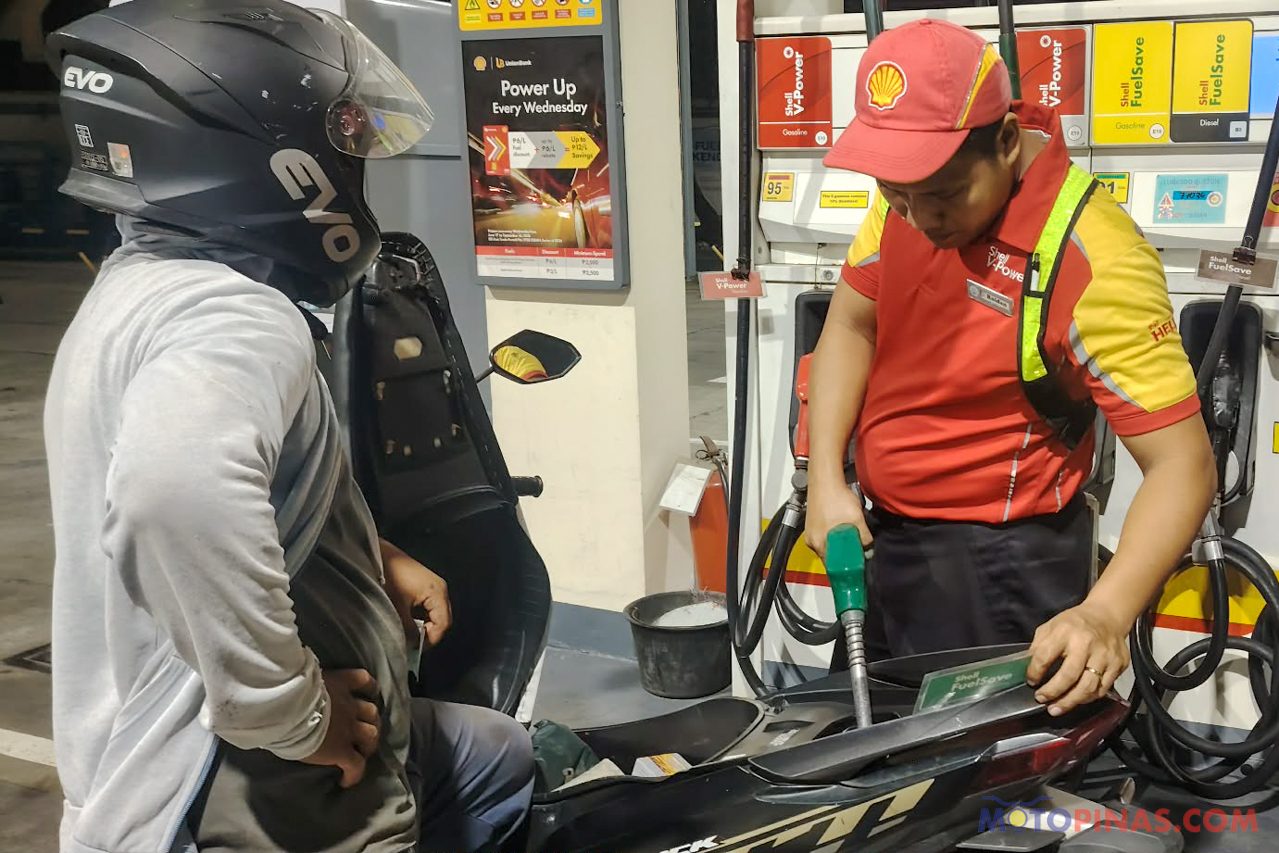
For motorcycle and car owners who use their vehicles to get to work every day, there is currently no equivalent fuel subsidy program. That could have been significant for many Filipino workers who rely on private vehicles because getting around by public transport remains a challenge.
Long queues, overcrowded vehicles, limited routes, multiple transfers and unpredictable travel times remain part of the daily commute for many Filipinos. For some workers, riding a motorcycle or driving a car is less about convenience and more about having a dependable way to get to and from work.
Higher fuel prices therefore translate directly into higher daily commuting costs.
And the impact doesn’t stop with motorists. Fuel is a major operating expense across transportation and logistics, so higher pump prices can eventually affect the cost of moving people and goods.
For now, however, private motorists will have to wait and see if the government eventually expands its direct fuel assistance program beyond the sectors currently being prioritized.