New Manila Ordinance now prohibits any face-concealing headgear
As peace and order continue to be a challenge, particularly the threat of ‘riding-in-tandem’ criminals, the City of Manila has passed an ordinance prohibiting the use of face coverings that conceal a person’s identity in many areas, including public roads within the city’s jurisdiction.
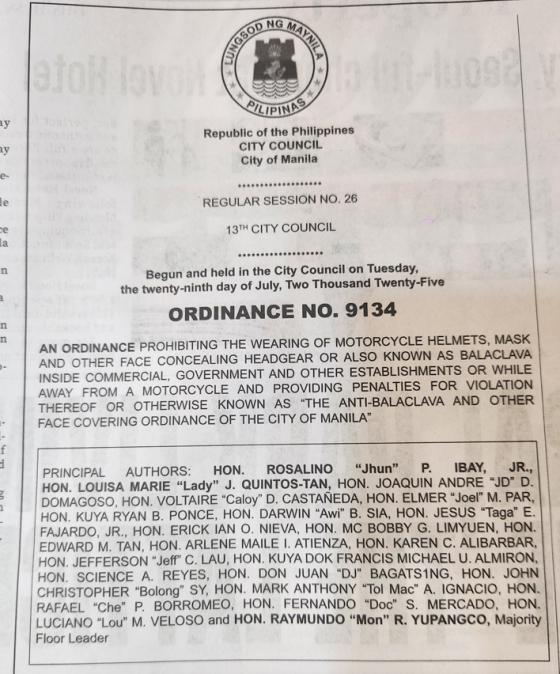
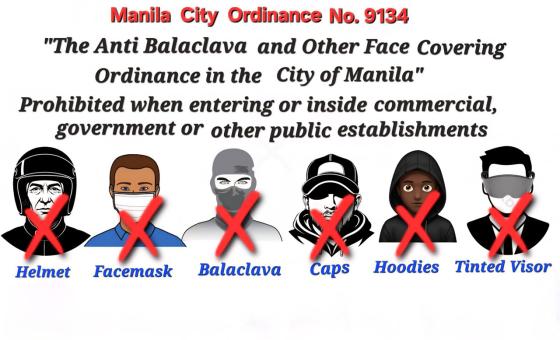
The Manila City Council recently approved Ordinance No. 9134, principally authored by Councilor Rosalino “Jhun” Ibay Jr. Titled the “Anti-Balaclava and Other Face Covering Ordinance of the City of Manila,” the measure prohibits the wearing of motorcycle helmets, masks, balaclavas, facemasks, hoodies, caps, or any headgear that conceals a person’s identity inside commercial, government, or other establishments.
The ordinance also extends to public spaces, banning the use of such face coverings when a rider has dismounted their motorcycle or is on “standby” mode along public roads, highways, subdivision streets, alleys, sidewalks, parks, parking lots, and market areas.
This means that a motorcycle rider could be penalized for failing to remove their helmet, balaclava, or any other face-concealing gear even while performing simple tasks, such as buying from a sari-sari store, fixing their motorcycle, or withdrawing cash from an ATM.
Under Ordinance 9134, violators will face a fine of PHP 1,000 for the first offense. A second offense carries a PHP 3,000 fine and mandatory community service of up to eight hours. For the third offense, the penalty increases to PHP 5,000 and/or 15 days of jail time, along with a recommendation for the revocation of the offender’s driver’s license.
There are, however, specific exemptions to the rule. Riders are allowed to wear helmets or face coverings while actively driving their motorcycles. The ordinance also makes exceptions during pandemics or public health emergencies when mask use is mandated by the Department of Health (DOH), for law enforcement officers performing official duties, for individuals with medical conditions or comorbidities requiring protective gear, and for persons whose religious customs or traditions necessitate the wearing of head coverings.
Additionally, private establishments are required to post clear and visible notices about the face-covering ban at their entrances to ensure customers are properly informed and avoid confusion.