Japan ministry catches rigged tests of manufacturers
The Japanese automotive industry was shocked by news of irregularities over certification and safety tests, which was announced by the country’s Ministry of Land, Infrastructure, Transport and Tourism.
According to the ministry, four automakers have already admitted to irregularities in the testing procedures, with Yamaha Motor admitting on the motorcycle manufacturers’ side.
“We take incidents of wrongdoing very seriously and offer our deepest apologies to our customers, suppliers, business partners, and all other stakeholders for damaging their trust in Yamaha Motor,” said the Iwata-based company through a press release.
The Ministry of Land, Infrastructure, Transport and Tourism, on the other hand, called the irregularities “actions that undermine users’ trust and shake the foundation of the [Japanese] automotive certification system.”
Because of this, shipments of three Yamaha motorcycles were suspended: R1, R3 and TMAX.
R1
According to Yamaha, “during the conditioning process, the certification testing personnel performed the conditioning at a different engine output than specified by regulations due to the testing equipment melting due to heat. The testers mistakenly judged that changing the engine output to avoid damaging the test equipment would not be a problem as long as it did not affect the durability and degradation of the sound-absorbing glass wool and satisfied the testing conditions for exhaust pressure, continuous operation, number of test cycles, and so on.”
Yamaha added that the R1 model has been re-tested according to the specifications of Japanese regulations, “and found to still be in compliance with standards.”
R3 and TMAX
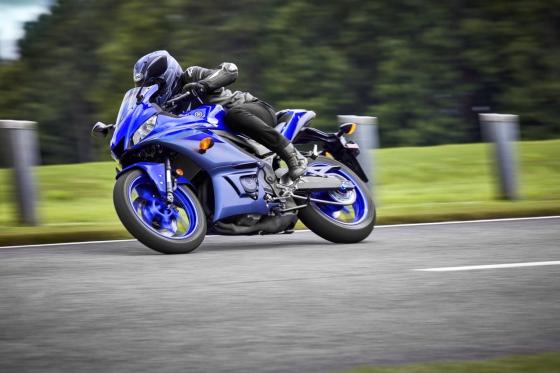
Yamaha R3
For the R3 and TMAX models, the sound pressure testing of these motorcycle models’ horns was tainted because of “an incorrect understanding of the rules, the personnel handling the applications did not include a comparison table and did not submit the VIN number of the previously tested vehicle and instead listed the VIN numbers of the vehicles being applied for.”
Measures to prevent recurrence
To prevent such incidents from ever happening again, Yamaha stated that the company will implement the following 7 measures:
- Clearly distinguish between certification work and development work in our testing rules.
- Ensure and maintain legal compliance in the certification process, provide regular training on the importance of the testing process, points to keep in mind, etc.
- Clearly designate certification departments as the responsible bodies to ensure legal compliance with the testing process.
- After creating an arrangement for keeping meticulous records of management items required in certification and development work, check the consistency of internal records and application documents as well as their legal compliance.
- Create a system to check application documents and internal reports within the department and ensure that the preparer and approver check each other effectively to keep the process from becoming a simple cross-checking formality.
- Clarifying the Company's interpretation of laws and regulations regarding the conditioning of vehicles for certification testing, turn them into company regulations, and disseminate them.
- Establish a system that ensures the procedures required by law and regulations for certification applications are incorporated in their entirety into the Company's own regulations.
So far, only Yamaha has been called upon by the Japanese Ministry of Land, Infrastructure, Transport and Tourism, while the automotive businesses of Honda and Suzuki are also being investigated for testing irregularities.