The Bajaj Chetak 3503 is finally here, SRP: PHP 130,888
Last month, Bajaj Philippines, through its local distributor Trimotors Technology Corporation, began teasing Filipino riders with the arrival of its all-electric Chetak lineup. For those unfamiliar with the name, the Chetak was one of Bajaj’s most recognizable scooters, serving as India’s answer to the Vespa from the 1970s until the early 2000s. In 2019, Bajaj revived the iconic nameplate, this time as a fully electric scooter.
Now, the Chetak 3503 has officially been launched in the Philippines with an introductory suggested retail price of PHP 130,888.
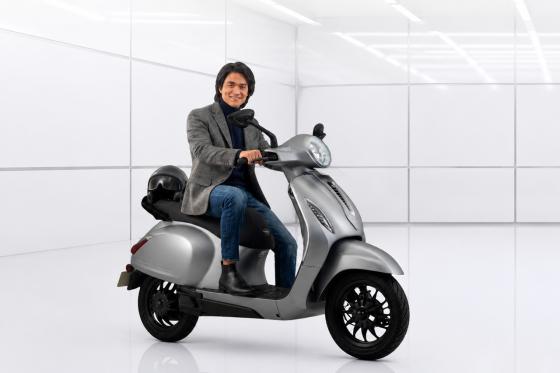
On paper, the Chetak makes a compelling case for itself. It features an all-metal body instead of the usual plastic panels, a color LCD instrument display with smartphone connectivity, Combined Braking System (CBS), multiple riding modes, a spacious underseat compartment, and a 3.5-kWh lithium-ion battery with a claimed riding range of more than 100 kilometers on a single charge.
The rounded bodywork pays homage to the classic Chetak while offering an alternative to the sharper, sportier designs that dominate today’s scooter market.
Price-wise, however, Juan dela Cruz has plenty of choices. For riders who prefer the same retro-inspired styling, the Yamaha Mio Fazzio starts at PHP 93,900, while Honda’s Giorno+ carries an SRP of PHP 103,000. The closest thing is CFMOTO’s 150 Aura, priced at PHP 131,700. While not “retro,” those shopping for a larger scooter can also look at the recently introduced Suzuki Burgman 15 (built by Houjue), priced at PHP 165,000; while Kawasaki’s Brusky 125 (built by Modenas) offers a more affordable alternative at PHP 75,000. Buyers willing to spend a little more can step into the Vespa family, with the “cheapest” Vespa S starting at around PHP 160,000.
Then there’s the question almost every curious buyer will probably Google: “How much does it cost in India?” A quick search shows the Chetak 3503 currently sells for around INR 124,000 to INR 129,000 in its home market, or roughly PHP 80,000 to PHP 85,000. That’s about PHP 45,000 to PHP 50,000 less than its Philippine SRP.
At first glance, that difference appears significant, but comparing prices between India and the Philippines isn’t exactly an apples-to-apples exercise. The Indian figure is the base price for a scooter that’s built and sold in its home market. Units destined for the Philippines have to absorb import duties, taxes, freight, logistics, dealer margins, and other costs before they reach local dealerships.
Production volume also plays a role, as Bajaj sells electric scooters in far greater numbers in India than it currently does overseas, allowing manufacturing and distribution costs to be spread across a much larger market.
Even so, pricing will inevitably be part of every buyer’s decision. At PHP 130,888, the Chetak isn’t really competing with entry-level electric scooters. Instead, it finds itself alongside established gasoline-powered models that have earned buyers’ trust over the years and are supported by extensive dealer and service networks nationwide.
That doesn’t necessarily make the Chetak expensive or poor value. After all, there are still many buyers who aren’t simply paying for a mode of transportation. They’re getting a distinct design, premium all-metal construction, an electric powertrain, and the heritage of one of India’s best-known motorcycle manufacturers.
So, if you had PHP 130,000 to spend today, would you choose the all-electric Bajaj Chetak 3503, or would you stick with a good old-fashioned, fossil fuel-burning scooter?