The LTO is 112 years old
This month marks the 112th founding anniversary of the Land Transportation Office (LTO). In case you missed it, the agency that is primarily tasked to implement the traffic laws here in the country was established way, way back during the American Colonial Period.
American Colonial Period
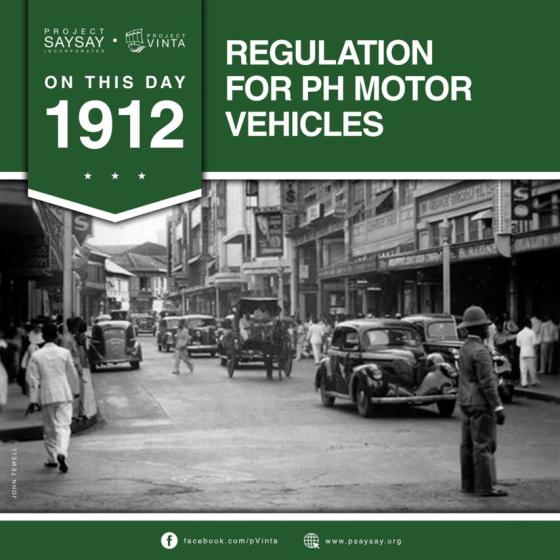
Photo courtesy of Project Vinta
The LTO – as we know it today – was established by the American Colonial Insular Government in the Philippines in 1912 under Act No. 2159.
Act No. 2159 established the Automobile Section to regulate and license the operators of motor vehicles in the Philippines. The Automobile Section functioned under the Administrative Division of the Bureau of Public Works.
By 1926, Act No. 3045 compiled and incorporated all laws governing motor vehicles, and the Automobile Section became the Automobile Division. By 1933, Act No. 3992 amended Act No. 3045, and the Automobile Division was renamed the Division of Motor Vehicles (DMV).
After WWII

Photo courtesy of US Army Photo/Manila Nostalgia
Shortly after World War II, the Department of Public Works and Highways (DPWH) issued Department Order No. 4 to reorganize the DMV. By 1947, Executive Order (EO) No. 94 was issued by then-President, Manuel Roxas, reorganizing the different offices, bureaus and agencies of the post-war Philippine government. At the time, the DMV was reorganized and was renamed the Motor Vehicles Office (MVO).
By 1964, Republic Act 4136, or the Land Transportation and Traffic Code was enacted and effectively created the Land Transportation Commission (LTC). The LTC was headed by the Land Transportation Commissioner.
During Martial Law, then-President Ferdinand Marcos Sr. issued EO 546, establishing the Ministry of Transportation and Communications (MOTC). LTC was then renamed into the Bureau of Land Transportation (BLT) and functioned under MOTC.
EDSA
In 1987, after the EDSA People Power Revolution, the Land Transportation Office (LTO) was created, along with the Land Transportation Franchising and Regulatory Board (LTFRB).
Like the BLT and the Automobile Section before it, the LTO is in charge of the issuance, renewal, and regulation of driver's licenses, as well as for the registration of motor vehicles and renewals.
The LTO is also mandated to implement and enforce the laws regarding land transportation.
2020s
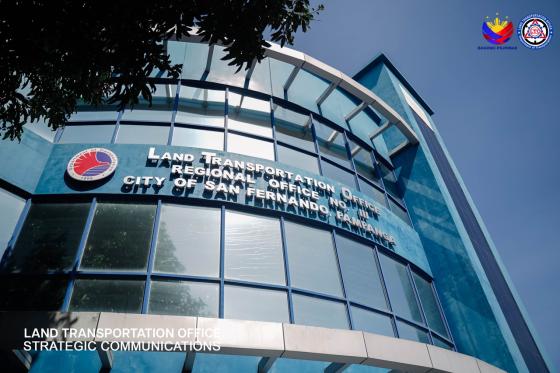
Photo courtesy of LTO
Today, the LTO, under the Department of Transportation (DOTr), is slowly (but surely) embracing the digital age by enacting policies that make transacting with the agency faster and more convenient. One example is the use of the Land Transportation Management System or LTMS.
LTMS is basically a one-stop shop, online-based system that manages the agency’s day-to-day transactions, including vehicle registrations and issuance of driver’s licenses. Motorists can also access the LTMS online to manage their renewals, see their traffic violations, as well as access their digital driver’s license.