Motorcycle group questions fairness of Valenzuela anti–loud pipe drive
The issue of motorcycle exhaust noise, commonly referred to as “loud pipes,” has long been a point of contention among riders, regulators, and communities. Supporters of louder exhaust systems argue that increased noise enhances rider safety under the belief that “loud pipes save lives,” as it alerts nearby motorists to a motorcycle’s presence. Critics, however, maintain that excessively loud exhausts constitute noise pollution, particularly in residential areas during late-night and early-morning hours.
At the national level, the Land Transportation Office (LTO) has established limits on allowable vehicle noise. Despite this, several local government units (LGUs) have enacted their own anti–loud pipe ordinances. The City of Manila, for instance, drew public attention with Ordinance No. 8772, which imposes a PHP 5,000 fine on violators.
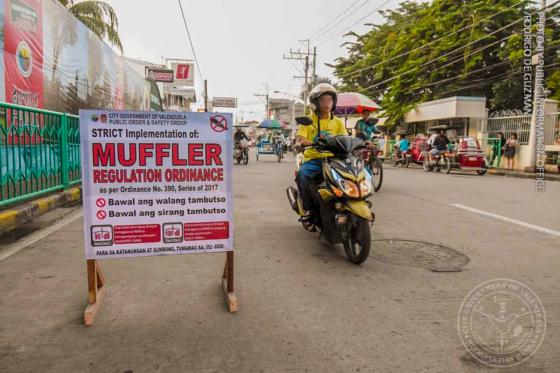
Motorcycle Rights Organization (MRO), however, has raised concerns over how similar ordinances are being enforced in Valenzuela City. The group claims that enforcement has gone beyond roadside inspections, citing reported instances of “sugod-bahay” or house-to-house apprehensions, where authorities allegedly inspect or test motorcycles for noise levels within private residential properties.
According to MRO, such practices raise legal questions under Republic Act No. 4136, or the Land Transportation and Traffic Code, which generally enforces traffic and noise violations under the principle of in flagrante delicto—meaning apprehensions occur while a vehicle is being operated on public roads, not while it is stationary on private property.
MRO has also questioned whether Valenzuela City’s enforcement methods are consistent with national standards. While the LTO sets a maximum noise limit of 99 decibels (dB), measured under specific conditions including a defined distance and engine speed of 2,000 to 2,500 rpm, the group argues that testing methods used on the ground may vary. Measurements conducted in enclosed or echo-prone areas, or using allegedly uncalibrated equipment, could produce inconsistent results.
In addition, MRO has raised concerns over what it describes as selective enforcement, claiming that operations disproportionately target motorcycles while similarly loud modified cars, SUVs, and trucks were ignored. The group also questions the treatment of aftermarket exhaust systems that are legally imported, manufactured, and sold with government permits, but later deemed illegal under certain local ordinances.
We have contacted Valenzuela City for comment and said it would issue a response once available.