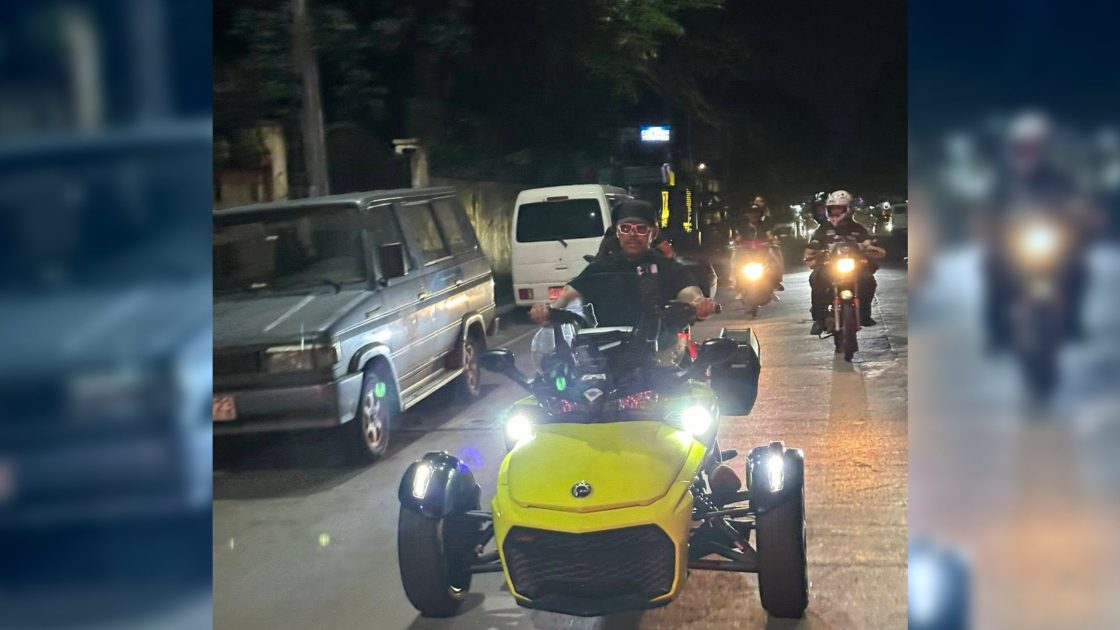
Motorcycle taxi and delivery riders could finally get full employee benefits
We all know that every completed booking earns money for an online platform. That’s only fair because the company built the app and connects riders with customers. But what happens if a motorcycle taxi or delivery rider gets injured while completing that booking? Who steps in to help?
That’s one of the questions a proposed measure in Congress hopes to address.
House Bill No. 6572 (full text can be viewed here), or the proposed “Protektadong Online Workers, Employees, Riders, at Raketera (POWERR) Act,” seeks to regulate work arranged through online platforms while expanding the rights and protections of Filipino gig workers.
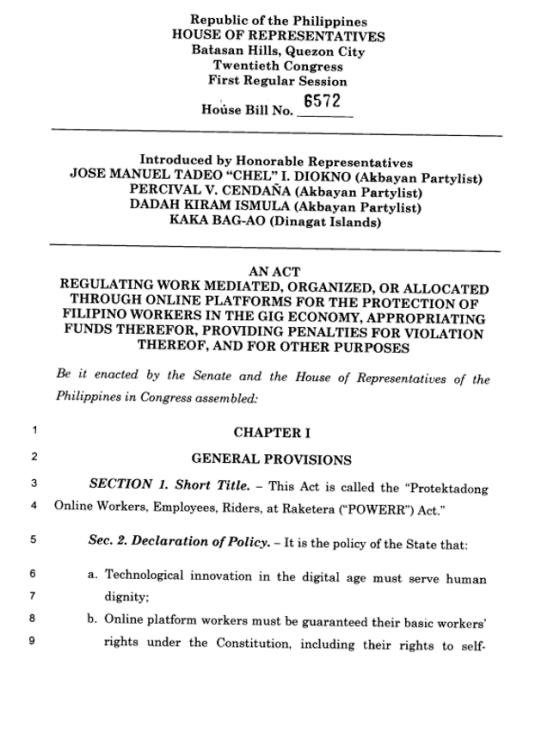
The measure was filed by Akbayan Representatives Chel Diokno, Perci Cendaña, Dadah Ismula, and Dinagat Island Representative Kaka Bag-ao.
The bill has a broad scope, covering everyone from freelancers and virtual assistants to TNVS drivers. For motorcycle taxi and delivery riders, however, it could bring some of the biggest changes to the way they work.
Under the measure, anyone paid by an online platform provider for work performed will generally be considered a regular employee, regardless of what their contract calls them. Riders who genuinely want to remain independent contractors may still do so, but only after applying with the Department of Labor and Employment (DOLE) and meeting the requirements laid down in the proposed law.
In simple terms, that means riders could become entitled to many of the same rights and benefits that regular employees from other fields and industries already enjoy.
The bill also requires online platforms to provide written contracts that clearly state the work to be performed, how much riders will be paid, how payments will be made, and other key terms of the job. It also requires companies to disclose if algorithms or automated systems are being used to monitor riders or make decisions that could affect their work, such as performance evaluations, account suspensions, or deactivation.
Safety is another major focus of the proposal. The bill requires online platform providers to supply personal protective equipment, such as helmets, free of charge whenever necessary because of the nature of the work. It also treats platform providers as employers when it comes to injuries sustained by riders while performing their duties. In plain language, platforms could no longer simply distance themselves when a rider gets hurt while completing a booked job.
The proposed law also strengthens riders’ protection against sudden deactivation. Companies would have to explain why a rider is being suspended or terminated, provide a written basis for the decision, and ensure that termination is only for a valid cause. If a rider is removed without valid cause, the bill provides for payment of the remaining compensation due under the contract, plus an additional 10% of the rate of compensation, as indemnity.
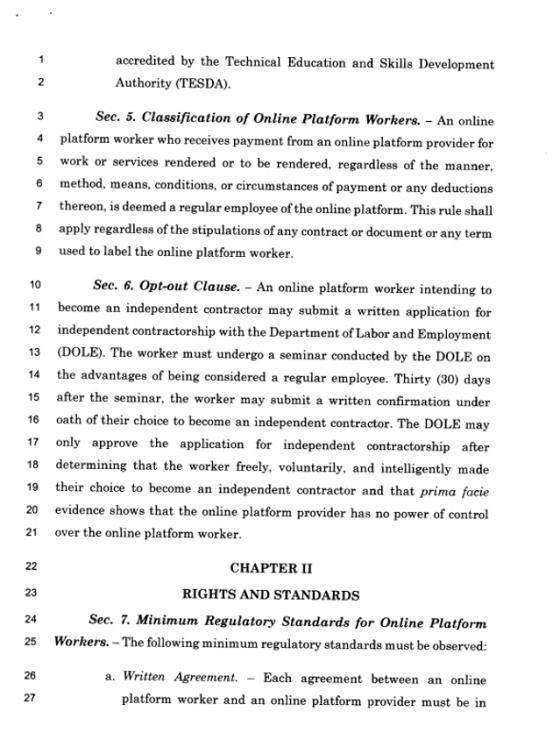
Beyond that, the measure guarantees online platform workers the right to organize, bargain collectively, and be protected against discrimination. It also proposes that workers receive at least the highest applicable minimum wage under Philippine law, along with overtime pay, holiday pay, night shift differential, and mandatory SSS, PhilHealth, Pag-IBIG, and maternity benefits.
Supporters of the bill argue that while online platforms continue to earn from every completed booking, riders should not be left to shoulder all the risks that come with the job. They say the proposed law would create clearer accountability for platform operators while giving riders protections that better reflect the work they perform every day.
For now, the POWERR Act remains a proposed measure. It must still pass both houses of Congress and be signed into law before any of its provisions can take effect.