Suzuki’s small bikes can feature VVT tech soon
Variable Valve Timing (VVT) technology is a well-established feature in numerous cars and flagship motorcycles. Simply put, VVT allows an engine to optimize its “breathing.” During steady cruising, it modifies valve timing to enhance fuel economy and smoothness. On the other hand, when the driver or rider demands more power, such as for acceleration or overtaking another vehicle, VVT adjusts the timing to facilitate a greater intake of air and fuel.
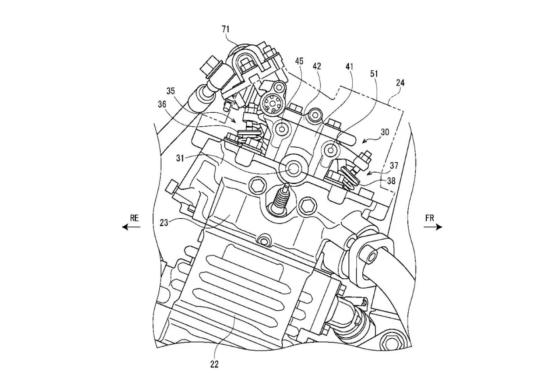
As for Suzuki, recent patents suggest that it is preparing to introduce VVT technology to its smaller cc range, potentially starting with the Indian-made V-Strom 250 SX and the Gixxer 250.
Currently, this air and oil-cooled 249cc engine produces a claimed 26 PS at 9,300 rpm. The integration of VVT could potentially boost this output to another 3-4 PS. However, Suzuki’s primary focus with this technology seems to be achieving cleaner emissions to meet increasingly stringent global regulations, rather than solely maximizing power from this smaller engine.
Unlike Suzuki’s SR-VVT introduced in the GSX-R1000, which uses a centrifugal-actuated mechanism on the intake camshaft sprocket, this new VVT system for the smaller 250s will be utilizing an actuator (either electronically or hydraulically activated) to adjust the valve timing.
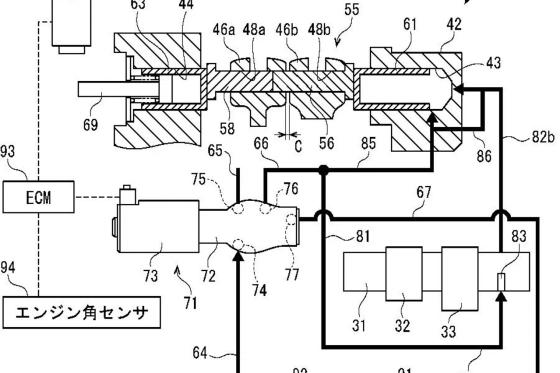
While Yamaha currently uses Variable Valve Actuation (VVA) on some of its smaller bikes, Honda (VTEC), Kawasaki, and Suzuki (SR-VVT) have typically featured their variable valve timing systems on some of their big bike models.